Service Business Call Handling Guide That Books More
September 16, 2026
This service business call handling guide shows how to capture every inquiry, qualify callers, book appointments, and improve front-desk coverage daily.
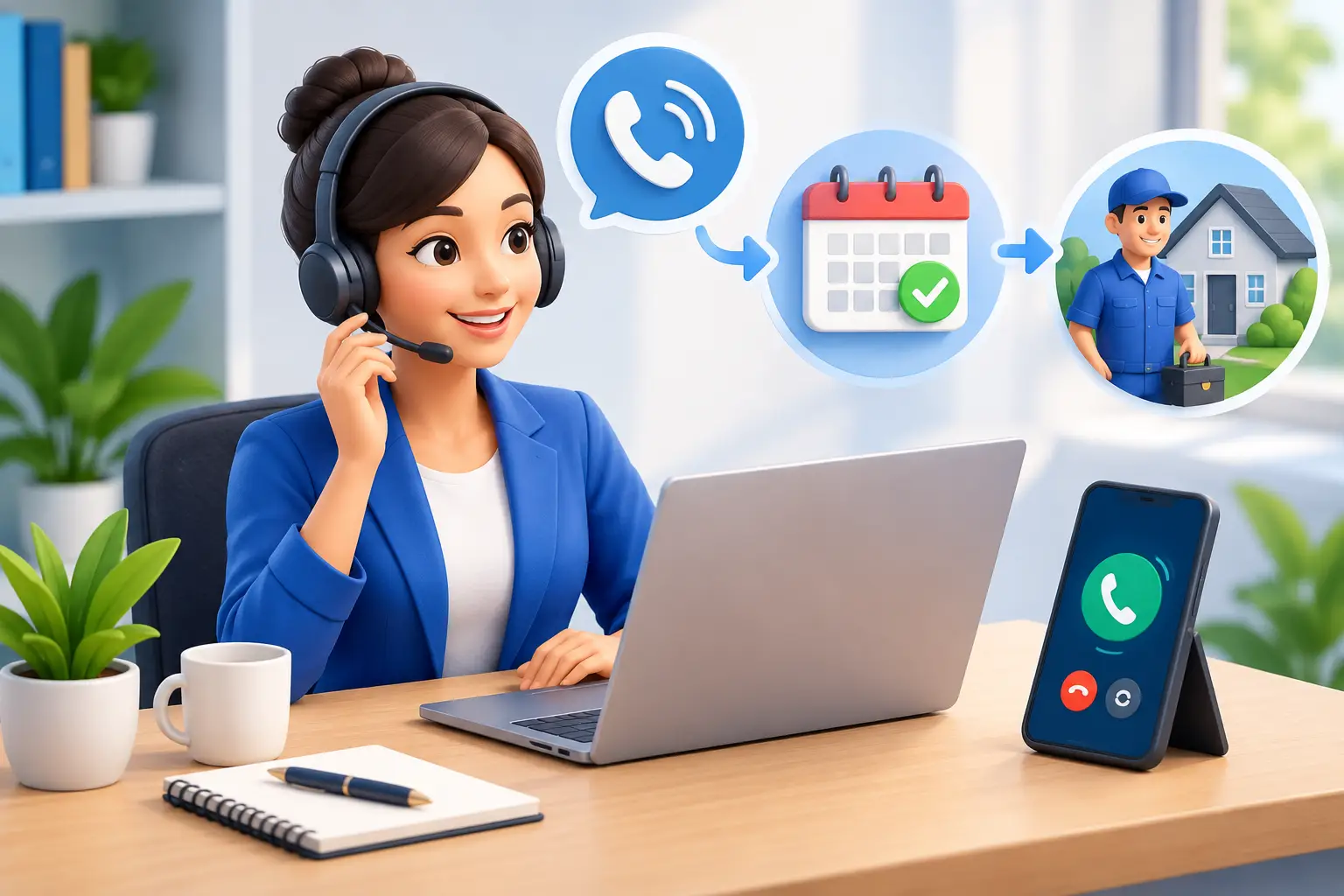
A ringing phone is often a customer ready to act. For appointment-driven businesses, the gap between that call and a confirmed booking can be a few minutes, a missed detail, or no answer at all. This service business call handling guide lays out the operating standards that turn inbound calls into scheduled appointments, qualified leads, and consistent customer communication.
Treat every call as a booking opportunity
A caller may be asking a simple question, but the business outcome should be clear: give them an accurate answer, determine the next best step, and move the conversation forward. That may mean booking an appointment, collecting details for a callback, routing an urgent request, or confirming that an existing appointment is still on schedule.
The common failure is treating call handling as a basic administrative task. It is a revenue and service function. When calls go unanswered, callers rarely wait. They contact another provider, especially when they need a same-day appointment, a price range, or help with an urgent issue.
That is why coverage matters as much as call quality. A capable front desk during business hours still leaves exposure during lunch, after hours, staff meetings, busy periods, and unexpected absences. Your process needs a reliable way to receive and act on every inquiry, regardless of when it arrives.
Build a call flow your team can follow
A call script should not make staff sound scripted. It should make the operation dependable. The best call flows give reception staff clear decision points while leaving room for a natural conversation.
Start with a concise greeting that identifies the business and offers help. Then establish why the customer is calling before asking for a long list of details. A caller who wants to schedule should be directed to availability quickly. A caller with an urgent issue should not be forced through a general intake sequence.
Identify the caller's intent early
Most inbound calls fall into a limited number of categories: new appointment requests, existing appointment changes, service or pricing questions, urgent concerns, billing questions, and requests for a specific person. Your team should be able to recognize the category within the first part of the conversation.
This keeps calls short without making them impersonal. It also prevents a frequent front-desk problem: collecting information that is not needed while failing to capture the information that determines what happens next.
For a new inquiry, capture the caller's name, callback number, requested service, preferred time, and any details needed to determine fit or urgency. For an existing customer, confirm identity and locate the appointment before discussing changes. Repeat essential details back to the caller before ending the call.
Set rules for questions that cannot be answered immediately
No receptionist, human or automated, should guess about pricing, availability, policies, or service eligibility. Guessing creates rework and erodes trust when the business has to correct the information later.
Document approved answers to common questions and define an escalation path for everything else. If a question needs staff review, tell the caller when they can expect a response and assign ownership before the call record disappears into a shared inbox.
A useful standard is simple: every unresolved call needs a named next action, an owner, and a timeframe. “Someone will call you back” is not an operating process.
Make scheduling the center of the conversation
For service businesses, a call is only fully handled when the customer knows what will happen next. Whenever possible, the next step should be a confirmed appointment rather than a vague promise to reconnect.
Offer specific appointment options instead of asking an open-ended question such as, “When would you like to come in?” Two or three available windows reduce back-and-forth and help callers make a decision. Confirm the date, time, location or service format, provider if relevant, and any preparation required.
If the schedule is full, do not end the conversation with “We have nothing available.” Offer the earliest opening, a waitlist option, a cancellation notification, or a request for staff follow-up. A full calendar can still produce future bookings if callers receive a clear alternative.
Appointment confirmation is equally important. A customer who hears the details once may still misremember the time or forget an instruction. Follow-up confirmations and reminders reduce no-shows, limit avoidable inbound calls, and create a more professional customer experience.
Use automation where coverage breaks down
A traditional front desk works well until call volume exceeds capacity or the office is closed. Hiring more coverage can solve part of the problem, but it introduces staffing cost, training requirements, turnover risk, and inconsistent handling across shifts.
An AI receptionist can provide a practical layer of coverage for routine inbound conversations. It can answer calls, collect lead information, respond to approved questions, schedule appointments, send confirmations, and route exceptions according to business rules. The value is not replacing judgment in complex situations. It is ensuring basic reception work happens consistently when a human team cannot respond immediately.
Ortuas is designed around this receptionist function: capturing inquiries, handling scheduling, and maintaining customer communication without leaving calls to voicemail. For an office manager, that means fewer manual callbacks. For an owner, it means more opportunities reach the schedule instead of being lost after the first ring.
Automation needs guardrails. Configure it with current business hours, services, appointment types, service areas, policies, escalation rules, and staff routing details. Review actual call outcomes regularly. If callers repeatedly ask a question the system cannot answer, update the knowledge and workflow rather than accepting repeat friction.
Measure the call handling metrics that affect revenue
Call volume alone does not tell you whether your front desk is performing. A busy phone line can indicate demand, but it can also hide missed opportunities and unnecessary administrative work.
Track these operational metrics together:
- Answer rate: the percentage of inbound calls answered by a person or approved automated system.
- Missed-call recovery rate: how often missed callers receive a timely, documented follow-up.
- Booking conversion rate: the share of relevant new inquiries that become scheduled appointments.
- Speed to response: the time between a caller's inquiry and a meaningful response or next action.
- No-show rate: whether confirmations and reminders are helping customers keep appointments.
Review these numbers by time of day and call type. If after-hours callers convert well but rarely receive responses, extended coverage may have an immediate impact. If many calls end without a booking, review whether availability, pricing clarity, qualification rules, or the call flow is creating the barrier.
Metrics should lead to operational changes. A report that does not change scheduling rules, staffing decisions, scripts, or follow-up behavior is only a report.
Keep the customer experience clear and accountable
Fast call handling should never feel rushed. Callers want a direct answer, a confident next step, and the sense that the business has their information correct. That requires concise language, accurate records, and a process that does not make customers repeat themselves across calls or messages.
Privacy also matters. Collect only the information necessary for scheduling and follow-up, particularly in professional services where customers may share sensitive details. Make sure staff know what can be discussed, what requires verification, and when a call should move to a secure or specialized channel.
Consistency is the goal. Whether a customer calls at 10:00 a.m., during a packed afternoon, or after normal office hours, they should receive a useful response and a dependable next step. Build your call handling process around that standard, then let the right mix of trained staff and receptionist automation keep it running when demand is highest.
Get tips like this in your inbox
We send practical guides on AI, automation, and growing your service business. No spam.