What Ortuas AI Receptionist Actually Solves
March 9, 2026
See how ortuas ai receptionist helps service businesses capture more inquiries, book faster, and reduce front-desk workload without extra hires.
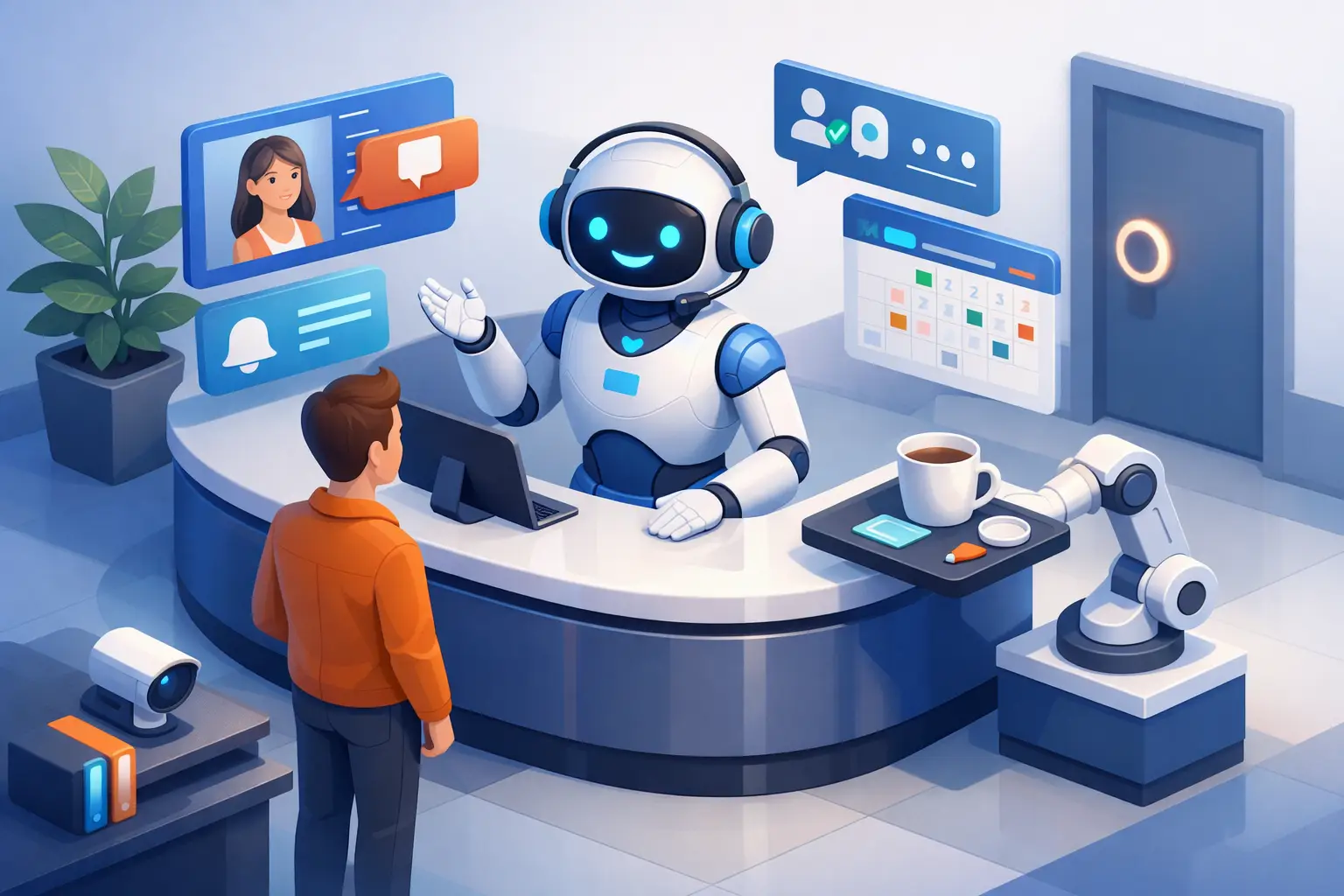
A missed call is rarely just a missed call. For appointment-driven businesses, it is often a missed booking, a delayed response, or a customer who moves on to the next provider.
That is the operating problem the ortuas ai receptionist is built to solve. Not as a general AI assistant and not as another chatbot added to an already crowded workflow. It is designed for one job: handling front-desk communication with the speed and consistency that service businesses need to protect revenue.
What the Ortuas AI receptionist is built to do
Most service businesses do not struggle because their team lacks effort. They struggle because inbound demand is uneven, phones ring while staff are busy, and scheduling tasks compete with everything else happening at the front desk. Even a strong team will miss inquiries when the workload spikes.
The Ortuas AI receptionist addresses that gap by acting as an always-on reception layer. It answers inbound inquiries, captures lead information, handles appointment scheduling, confirms bookings, and supports ongoing customer communication. The practical result is straightforward: fewer missed opportunities and less administrative drag on staff.
That distinction matters. Many AI tools are positioned as broad customer support platforms. That sounds flexible, but for operators, broad often means vague. Reception is a specific operational function with measurable outcomes. Did the call get answered? Was the lead captured? Was the appointment booked correctly? Was the customer kept informed? Ortuas is centered on those outcomes.
Why reception breakdowns cost more than they appear to
Front-desk inefficiency usually shows up in small moments. A call goes to voicemail during lunch. A staff member plans to return it later but gets pulled into check-in, billing, or service coordination. An online inquiry sits unanswered for an hour. A patient or customer needs to reschedule, but no one has time to manage the exchange cleanly.
Individually, these look minor. Operationally, they create a pattern of leakage.
The cost is not limited to lost leads. It also affects staff utilization, customer satisfaction, and schedule quality. If employees spend too much time fielding repetitive inquiries and manually confirming appointments, they have less time for higher-value work. If customers experience slow responses, trust drops before the relationship even starts. If appointment communication is inconsistent, no-shows and scheduling friction tend to rise.
This is why an AI receptionist is not just a convenience layer. For many businesses, it is a throughput tool. It helps convert inbound demand into actual appointments while keeping communication standards consistent.
Where an AI receptionist fits in daily operations
For most organizations, reception work sits between marketing and fulfillment. Marketing brings in calls, messages, and form submissions. The front desk turns that interest into scheduled activity. If that handoff is weak, growth stalls even when demand exists.
The ortuas ai receptionist fits at that exact handoff point. It gives businesses coverage when staff are unavailable, after hours, during peak call periods, or when the team simply needs reinforcement. That can mean full replacement of routine receptionist tasks in some environments, or support for an in-house team in others.
Which model makes sense depends on call volume, service complexity, and scheduling rules. A business with straightforward appointment types may rely on automation heavily. A practice with more nuanced intake requirements may use AI to capture, qualify, and route inquiries while keeping certain exceptions with staff. The key is that automation should reduce front-desk load without creating confusion.
That is the standard operators should use when evaluating any receptionist platform. Not whether it sounds advanced, but whether it improves the actual flow of inquiry to appointment.
What good AI reception performance looks like
The most useful AI receptionist is not the one with the longest feature list. It is the one that performs reliably in the moments that affect booking outcomes.
First, response speed matters. Customers contacting a service business usually want an answer quickly, especially when they are comparing providers. A fast first response increases the chance that the inquiry becomes a booked appointment instead of a lost lead.
Second, consistency matters. Human teams vary by shift, experience, workload, and turnover. An AI receptionist creates a more standardized front-desk experience, which is especially valuable for multi-location businesses or offices trying to reduce training friction.
Third, scheduling accuracy matters. Booking is where many workflows break. If the system cannot support the reality of appointment handling, including confirmations and communication follow-up, it adds work instead of removing it. Reliable appointment management is what separates receptionist automation from a simple answering tool.
Fourth, handoff matters. Not every interaction should remain automated. A strong system knows when to capture details, when to confirm next steps, and when to route a conversation for human attention. That balance is important because over-automation can frustrate customers if exceptions are handled poorly.
Why service businesses choose Ortuas over a generic AI tool
There is a practical reason many businesses prefer a purpose-built receptionist platform over a broader conversational product. Front-desk operations are repetitive, timing-sensitive, and closely tied to revenue. They benefit from specialization.
A generic AI system may be able to answer questions, but that does not mean it is optimized to manage appointment workflows or support the pace of a live front desk. Reception work requires structured handling of inquiries, scheduling logic, confirmations, and follow-up communication. It is not enough to sound helpful. The system has to complete the job.
That is where a focused platform stands out. Ortuas is positioned around receptionist functions specifically - capturing inbound leads, managing appointment-related communication, and reducing the manual burden on staff. For operators, that focus makes evaluation easier because the value is tied directly to measurable workflow outcomes.
The trade-offs to think through before adopting AI reception
AI reception is a practical upgrade, but it is still an operational decision. The right setup depends on the business.
If your team handles highly customized intake that changes case by case, you may need a more selective automation model. If your appointment rules are simple and volume is high, a larger portion of front-desk work can be automated effectively. If brand experience is tightly tied to a white-glove human interaction, you may want AI to handle first response and appointment coordination while staff manage relationship-heavy conversations.
There is also the process question. An AI receptionist performs best when scheduling rules, service types, and escalation paths are clearly defined. Businesses with messy front-desk processes sometimes expect software to fix operational ambiguity on its own. It will help, but it works best when paired with a clear workflow.
That is not a drawback unique to AI. It is true of any system meant to improve throughput. Better tools produce better outcomes when the underlying process is intentional.
What to look for if you are comparing solutions
If you are evaluating reception automation, focus less on novelty and more on performance against front-desk KPIs. Can the system answer every inquiry promptly? Can it capture lead details accurately? Can it manage scheduling and confirmations without introducing friction? Can it reduce staff interruptions while maintaining a reliable customer experience?
You should also consider staffing economics. Hiring for full-time reception coverage is expensive, especially if you need extended-hour responsiveness or backup coverage for busy periods. Software does not replace every human interaction, but it can remove a large amount of repetitive communication work and improve coverage without adding payroll complexity.
For many businesses, that is the real case for adoption. Not replacing people for the sake of automation, but improving responsiveness, booking conversion, and schedule management in a way that scales more predictably.
A focused option like Ortuas, available at https://ortuas.com, is built around that exact business case.
The operational value of the Ortuas AI receptionist
The strongest argument for an AI receptionist is simple: reception quality should not depend on who is available in the moment. It should be consistent, responsive, and tied directly to appointment outcomes.
That is why the ortuas ai receptionist is most relevant for businesses where inbound communication drives revenue. If each inquiry matters, if missed calls create avoidable losses, or if staff spend too much time managing repetitive scheduling tasks, then reception automation is not a side project. It is part of running a more reliable operation.
The businesses that benefit most are usually not looking for experimental AI. They are looking for fewer missed opportunities, cleaner scheduling workflows, and a front desk that performs well even when the office is busy. That is a practical standard, and it is the right one to use.
When reception becomes more consistent, the rest of the operation gets easier to manage. Calls get answered. Appointments get booked. Staff get time back. And the customer experience improves before anyone on your team picks up the phone.
Get tips like this in your inbox
We send practical guides on AI, automation, and growing your service business. No spam.