How to Reduce Missed Appointments Fast
April 2, 2026
Learn how to reduce missed appointments with better reminders, faster response times, and tighter scheduling workflows that improve show rates.
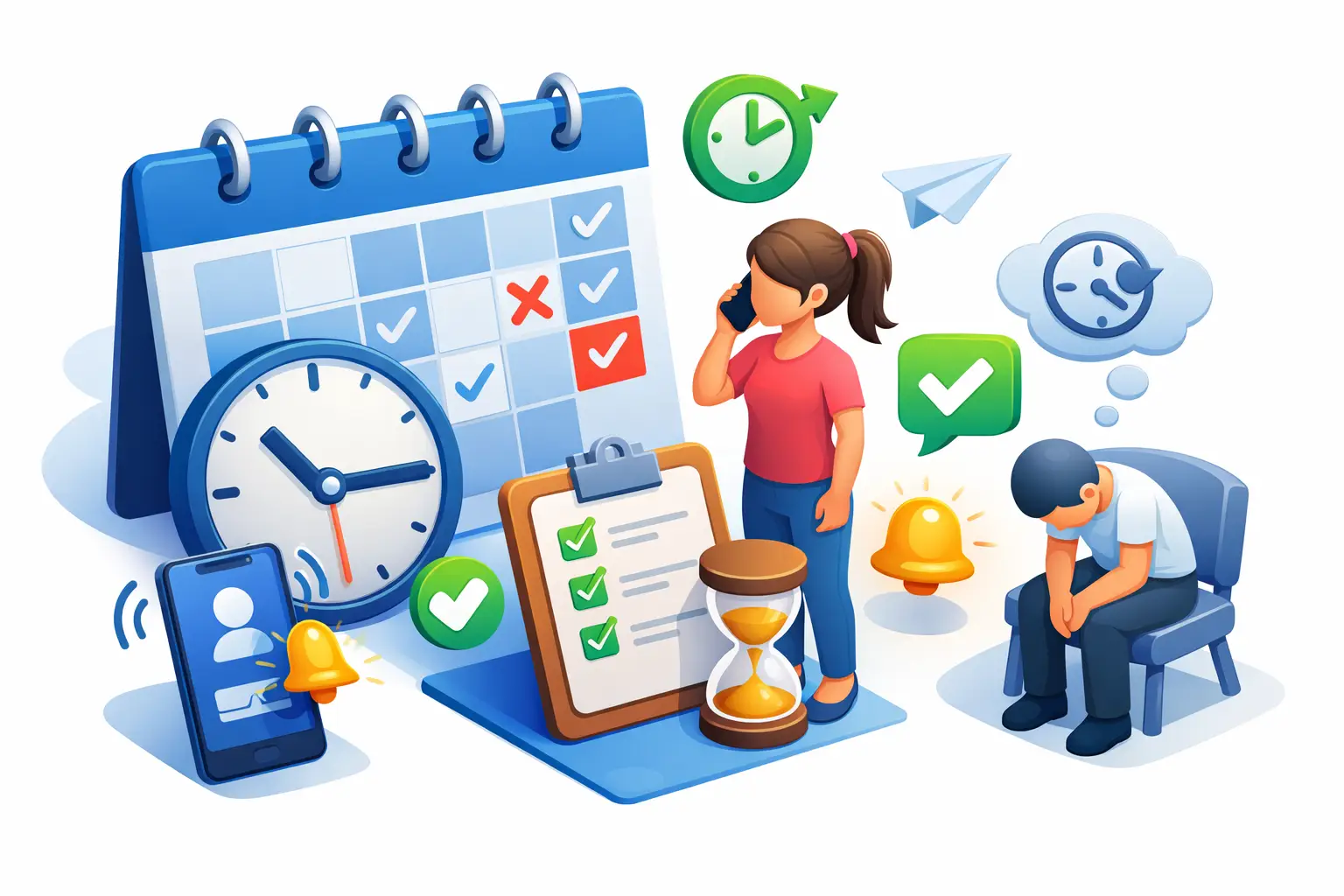
A full schedule looks strong on paper until patients, clients, or customers simply do not show up. At that point, the problem is not demand. It is execution. If you want to know how to reduce missed appointments, start by treating no-shows as a communication and workflow issue, not just a customer behavior issue.
Most missed appointments happen long before the scheduled time. They start when an inquiry sits too long without a response, when booking details are unclear, when reminders are inconsistent, or when rescheduling feels harder than disappearing. Businesses that improve show rates usually do not rely on a single fix. They tighten the full front-desk process from first contact to day-of confirmation.
How to reduce missed appointments at the source
The most effective way to reduce no-shows is to look at the entire appointment lifecycle. A customer contacts your business, asks a question, books a time, receives confirmation, gets reminders, and decides whether to keep, move, or cancel the appointment. If any step is slow or inconsistent, attendance drops.
That matters because missed appointments are expensive in more than one way. You lose revenue for that time slot, staff productivity falls, and the schedule becomes less predictable. Over time, no-shows also distort your demand planning. You may think you have a lead generation issue when the real problem is that booked appointments are not turning into completed visits.
A better system solves for reliability. It makes it easy to book, easy to confirm, and easy to reschedule without requiring staff to manually chase every customer.
Speed matters more than many teams think
One of the earliest causes of missed appointments is delayed response time. If an inbound caller reaches voicemail, submits a form, or sends a message and waits too long, they may still book later, but the commitment is weaker. Fast response creates momentum. Slow response creates uncertainty.
This is especially common in service businesses with limited front-desk coverage. Calls come in during lunch, after hours, or while staff are helping people on site. By the time someone follows up, the customer may be less engaged, confused about next steps, or already booked elsewhere.
That is why front-desk consistency matters as much as reminder strategy. If every inbound inquiry is answered, routed, and scheduled quickly, you improve both conversion and eventual show rate.
Clear booking reduces preventable no-shows
A surprising number of missed appointments come from poor booking communication. Customers may not fully understand the date, time, location, provider, required paperwork, pricing expectations, or how long the visit will take. When details feel fuzzy, people are more likely to cancel late or not appear at all.
Your booking process should confirm the basics immediately. The customer should know exactly what they booked, when they need to arrive, and what happens next. If there are prerequisites such as forms, insurance details, deposits, intake instructions, or preparation steps, those should be communicated right away rather than buried in a later message.
This is where automation can outperform a busy front desk. A standardized appointment workflow does not forget to send instructions, skip a reminder, or leave a voicemail callback for the end of the day. It handles repeatable communication the same way every time.
Use confirmation messages that remove doubt
A confirmation message should do more than state the appointment time. It should reduce uncertainty. Include the service type, date, time, location or access instructions, and what the customer needs to do before arrival. If they need to reply to confirm, make that action simple.
The goal is not to send more messages for the sake of activity. The goal is to send the right message at the right moment so the customer stays committed and informed.
Reminder timing is where many businesses underperform
If you are trying to figure out how to reduce missed appointments, review your reminder cadence before changing anything else. Many businesses either send one reminder too early or overwhelm customers with generic messages that they ignore.
A practical approach is to use multiple touchpoints spaced across the booking window. For example, a confirmation at booking, a reminder 24 to 48 hours before, and a final day-of message often works better than a single notice. The right timing depends on your appointment type. A dental cleaning, legal consultation, salon visit, and home service estimate all have different booking windows and customer behavior.
There is a trade-off here. Too few reminders lead to forgetfulness. Too many can feel repetitive and train people to tune you out. The best cadence matches the value and complexity of the appointment.
Reminder content matters too. A useful message should let the customer confirm, cancel, or reschedule with minimal friction. If the only path is calling the office during business hours, some customers will take the path of least resistance and do nothing.
Make rescheduling easier than no-showing
This is one of the most overlooked fixes. Businesses often focus on forcing attendance when they should focus on reducing silent drop-off. People miss appointments for ordinary reasons - schedule conflicts, transportation issues, childcare problems, work changes, or simple forgetfulness. If rescheduling is inconvenient, they disappear.
A better system gives customers a clear way to change the appointment before the slot is lost. That can preserve the relationship, recover revenue, and free the time for another booking. Operationally, a rescheduled appointment is far better than an unreported no-show.
This requires two things: customer-facing convenience and internal responsiveness. If someone replies after hours or tries to move an appointment when your office is busy, there still needs to be a process that captures the request and acts on it quickly.
Consistent front-desk coverage improves show rates
Many no-show problems are really coverage problems. When inbound calls go unanswered, reminder callbacks do not happen, and reschedule requests sit overnight, the schedule gets weaker. Staff may be doing their best, but if reception depends entirely on who is available at that moment, inconsistency becomes normal.
That is why businesses are shifting appointment handling into standardized systems. An AI receptionist can answer inquiries, confirm appointments, respond when staff are tied up, and keep communication moving outside normal business hours. For appointment-driven operations, that is not just a convenience. It is a direct way to protect booked revenue.
Ortuas is built around this front-desk function specifically: answering inbound inquiries, handling scheduling, and maintaining the follow-up needed to keep appointments on track. For businesses trying to reduce missed calls and missed appointments without adding headcount, that kind of coverage closes common gaps.
Measure where missed appointments actually come from
If your no-show rate is rising, do not assume the cause. Break the problem into stages. Are people failing to confirm after booking? Are no-shows concentrated in appointments booked far in advance? Do certain providers, locations, days, or appointment types underperform? Are missed appointments higher after hours or on bookings that started with voicemail?
These patterns tell you what to fix. If long lead times create drop-off, your reminder sequence may need adjustment. If missed appointments are highest for callers who could not reach your office on the first attempt, response coverage is likely part of the issue. If confusion about preparation leads to cancellations, your confirmation content needs work.
Without that visibility, businesses often add more manual effort in the wrong place.
Policies help, but they are not the whole answer
Cancellation policies, deposits, and no-show fees can reduce missed appointments, but they work best when paired with strong communication. A fee does not help much if customers were unclear on the appointment details or had no easy way to reschedule.
There is also a customer experience trade-off. In some industries, a hard policy screens for commitment and protects staff time. In others, it creates friction that lowers booking conversion. The right approach depends on appointment value, local competition, and how far in advance customers typically book.
For many service businesses, the highest-return fix is not a stricter penalty. It is a more reliable appointment workflow.
Build a system, not a reminder campaign
Businesses that consistently lower no-show rates usually stop treating missed appointments as isolated mistakes. They build a tighter system: faster response to inbound inquiries, immediate booking confirmation, clear instructions, timed reminders, simple rescheduling, and dependable front-desk coverage throughout the day.
That system does two things at once. It improves customer experience because people know what to expect. And it improves operations because staff are no longer patching gaps manually.
If you want fewer empty slots next month, start where breakdowns usually happen: missed calls, delayed follow-up, inconsistent reminders, and friction around rescheduling. Fix those, and appointment reliability tends to follow. The strongest schedules are not built by chance. They are built by communication that works every time.
Get tips like this in your inbox
We send practical guides on AI, automation, and growing your service business. No spam.