A Practical Guide to Inbound Inquiry Management
June 7, 2026
A practical guide to inbound inquiry management for service businesses that want faster response times, better booking rates, and less admin work.
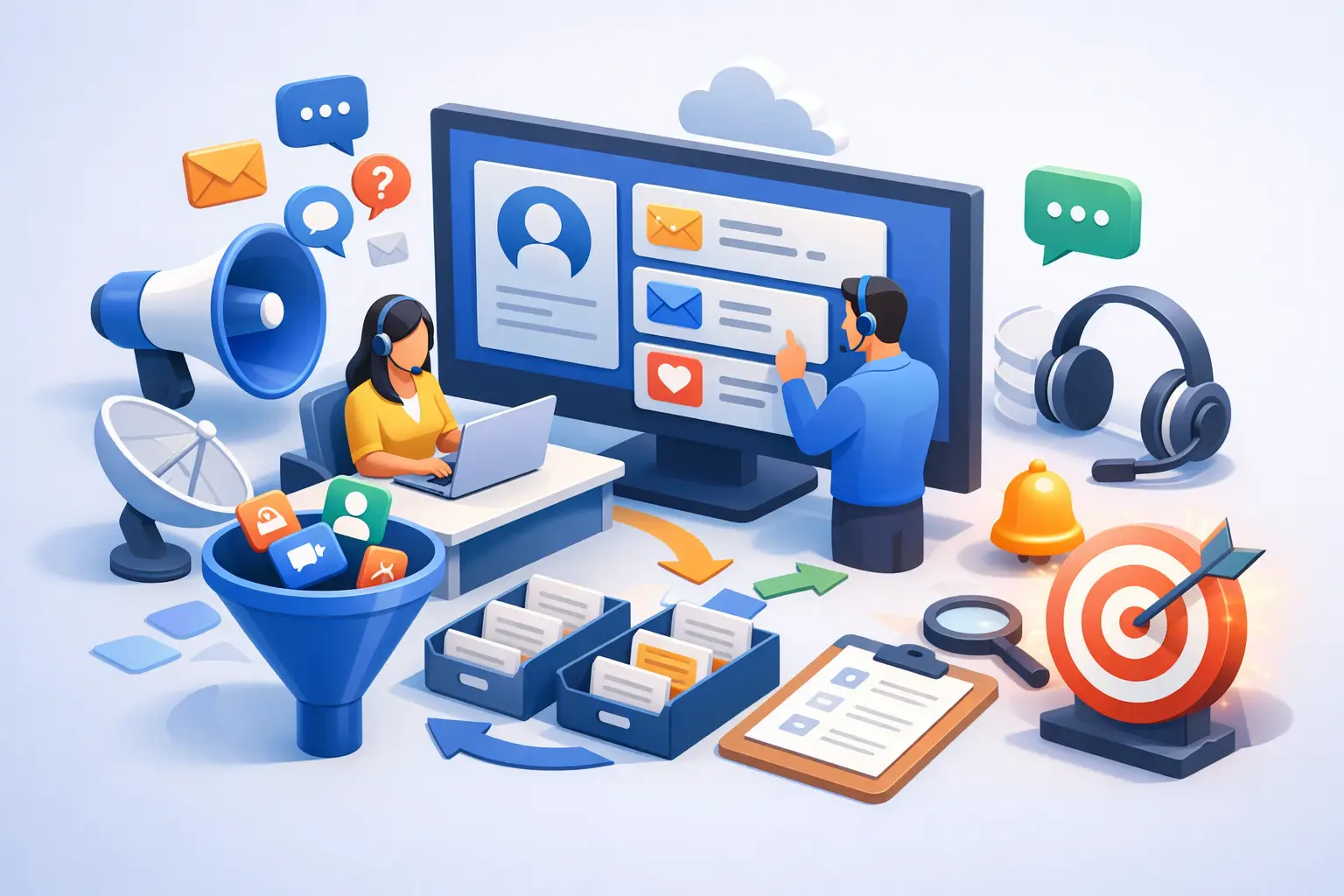
A missed inquiry is rarely just a missed call. For most service businesses, it is a missed appointment, a delayed estimate, or a customer who books somewhere else because nobody answered fast enough. This guide to inbound inquiry management is built for operators who need a better way to capture demand, respond consistently, and keep the front desk from becoming a bottleneck.
Inbound inquiry management is the system behind how your business receives, qualifies, routes, and converts incoming customer contact. That includes phone calls, web forms, text messages, voicemail, and appointment requests. When that system is weak, the symptoms show up everywhere - lower booking rates, overworked staff, slow follow-up, and customers repeating themselves across channels.
For appointment-driven businesses, this is not a marketing side issue. It is an operations issue tied directly to revenue.
What inbound inquiry management actually covers
A lot of businesses treat inbound inquiries as a simple answering problem. Someone picks up the phone, checks the calendar, and moves on to the next task. That works until volume rises, staff gets pulled in multiple directions, or inquiries come in after hours.
A real inbound inquiry management process covers five connected functions. First, every inquiry has to be captured. Second, it has to receive a response quickly. Third, the inquiry needs to be categorized so the business knows whether it is a new lead, an existing customer, a scheduling request, or a general question. Fourth, it has to be routed or resolved. Fifth, the interaction needs to end in a clear next step, such as a booked appointment, a callback, or a confirmed answer.
If even one of those steps breaks, conversion drops. A caller who reaches voicemail may never call back. A web lead that sits untouched for two hours may already be gone. A scheduling request handled inconsistently can create confusion, double-bookings, or no-shows.
Why service businesses struggle with it
The problem is usually not effort. It is coverage and consistency.
Most front desks are balancing inbound communication with in-person customers, internal coordination, billing questions, schedule changes, and routine admin work. Even strong teams miss inquiries when volume spikes or staffing is thin. Lunch breaks, evenings, weekends, and sick days create obvious gaps, but the bigger issue is that response quality changes depending on who is working and how busy they are.
That inconsistency affects more than customer experience. It affects throughput. If one staff member asks the right screening questions and books efficiently while another sends everything to voicemail, the business is running two different reception systems without realizing it.
This is where many operators start looking at automation. Not because they want a novelty tool, but because they need dependable reception coverage that does the same job every time.
A guide to inbound inquiry management that improves conversion
The strongest approach is not to throw technology at every message. It is to build a workflow that matches how customers actually contact you and how your team actually books work.
Start with response speed. For most inbound inquiries, the first few minutes matter more than the perfect script. A fast, accurate first response usually beats a polished but delayed one. If your process depends on someone becoming available later, your conversion rate is already under pressure.
Next, define what has to happen in the first interaction. For some businesses, that means collecting contact details, service type, preferred time, and urgency. For others, it may mean checking whether the inquiry is billable, whether the caller is in the service area, or whether the request needs a specialist. The point is to standardize the intake so no critical information gets lost.
Then look at routing. Not every inquiry should reach the same person. New appointment requests, current customer schedule changes, billing questions, and urgent service issues need different handling paths. When everything lands in one queue, response quality drops and staff spends too much time triaging instead of resolving.
Finally, make the next step explicit. Customers should never leave an interaction unsure whether they are booked, waiting for a callback, or expected to submit more information. Clear handoff points reduce both internal confusion and customer drop-off.
The channels that matter most
Phone calls still carry the highest intent for many local service businesses. People call when they want an answer now, when the issue is urgent, or when booking is easier by voice than by form. If phone coverage is unreliable, you are likely losing your best opportunities first.
Text and web inquiries matter for a different reason. They often come in outside business hours or from customers who do not want to wait on hold. These channels can convert well, but only if response time stays tight and scheduling does not require unnecessary back-and-forth.
Email tends to be slower and lower urgency, though it still matters for estimate requests, documentation, and ongoing communication. The right handling model depends on your business, but the operating principle stays the same: every channel needs a defined owner, a target response time, and a clear path to appointment handling.
Where manual workflows break down
Manual reception processes usually fail in predictable ways. The first issue is missed capture. Calls go unanswered, forms get buried, or staff write details on paper that never make it into the scheduling process.
The second issue is uneven qualification. One employee gathers all the right details. Another only takes a name and number. Later, the team has to call back just to ask basic questions, which adds delay and reduces booking momentum.
The third issue is fragmented communication. A customer calls, then texts, then submits a form because they are not sure the first message was received. Now your team has duplicate threads, partial context, and extra administrative work.
The fourth issue is after-hours loss. Many businesses accept that unanswered evening and weekend inquiries are normal. They are common, but they are not harmless. If customers are ready to schedule when your office is closed, delayed response means lower conversion.
What good automation should do
Good automation should act like a reliable reception layer, not like a generic chatbot dropped on top of your business.
That distinction matters. Inbound inquiry management for service businesses depends on practical functions: answering inquiries right away, collecting the right intake details, handling appointment requests, confirming next steps, and escalating when human involvement is required. If automation cannot support those reception tasks cleanly, it creates more work than it removes.
A useful AI receptionist should be able to respond consistently across your main inbound channels, follow your intake logic, route conversations appropriately, and support appointment workflows without confusing customers. It should also keep records structured enough that your team can step in without starting from scratch.
There are trade-offs. Full automation is not right for every scenario. Sensitive issues, complex service questions, or high-value exceptions may still need staff review. The goal is not to eliminate human judgment. The goal is to remove repetitive front-desk load and make sure no inquiry sits untouched.
How to evaluate your current setup
If you want to improve performance, start with a simple operational review. Look at how many inquiries come in each week, which channels they use, how long first response takes, and how many turn into booked appointments.
Then check where the breakdown happens. Some businesses have strong booking scripts but poor after-hours coverage. Others answer quickly but fail to collect enough information to schedule efficiently. Some teams are solid on calls but inconsistent on text and web submissions.
A useful test is to mystery shop your own front desk. Call during peak hours, submit a form at night, and send a text with a scheduling question. What happens next tells you more than any internal assumption.
If you decide to add automation, judge it by operational outcomes. Did response times improve? Did more inquiries get captured? Did booking throughput increase? Did admin work decrease? Those are the metrics that matter.
Building a system that holds up under volume
The best inbound inquiry management systems are not built around best-case conditions. They are built for busy mornings, overlapping requests, late-night messages, and the reality that customers contact businesses whenever it suits them.
That means your process should not depend on one front-desk person having a quiet day. It should hold up when call volume spikes, when a scheduler is out, or when the office is closed but appointments are still being requested.
For many service businesses, that is where an AI receptionist becomes a practical upgrade. It extends coverage, standardizes intake, and keeps appointment workflows moving without adding headcount. Used well, it does not replace your operation. It strengthens the part customers feel first.
If your front desk is carrying too much variation, too much delay, or too many missed opportunities, fix the inquiry flow before you chase more leads. Better handling at the point of contact often produces faster growth than more traffic ever will.
Get tips like this in your inbox
We send practical guides on AI, automation, and growing your service business. No spam.