Can AI Book Customer Appointments?
April 12, 2026
Can AI book customer appointments? See where AI reception works best, where it needs rules, and how it improves booking speed and coverage.
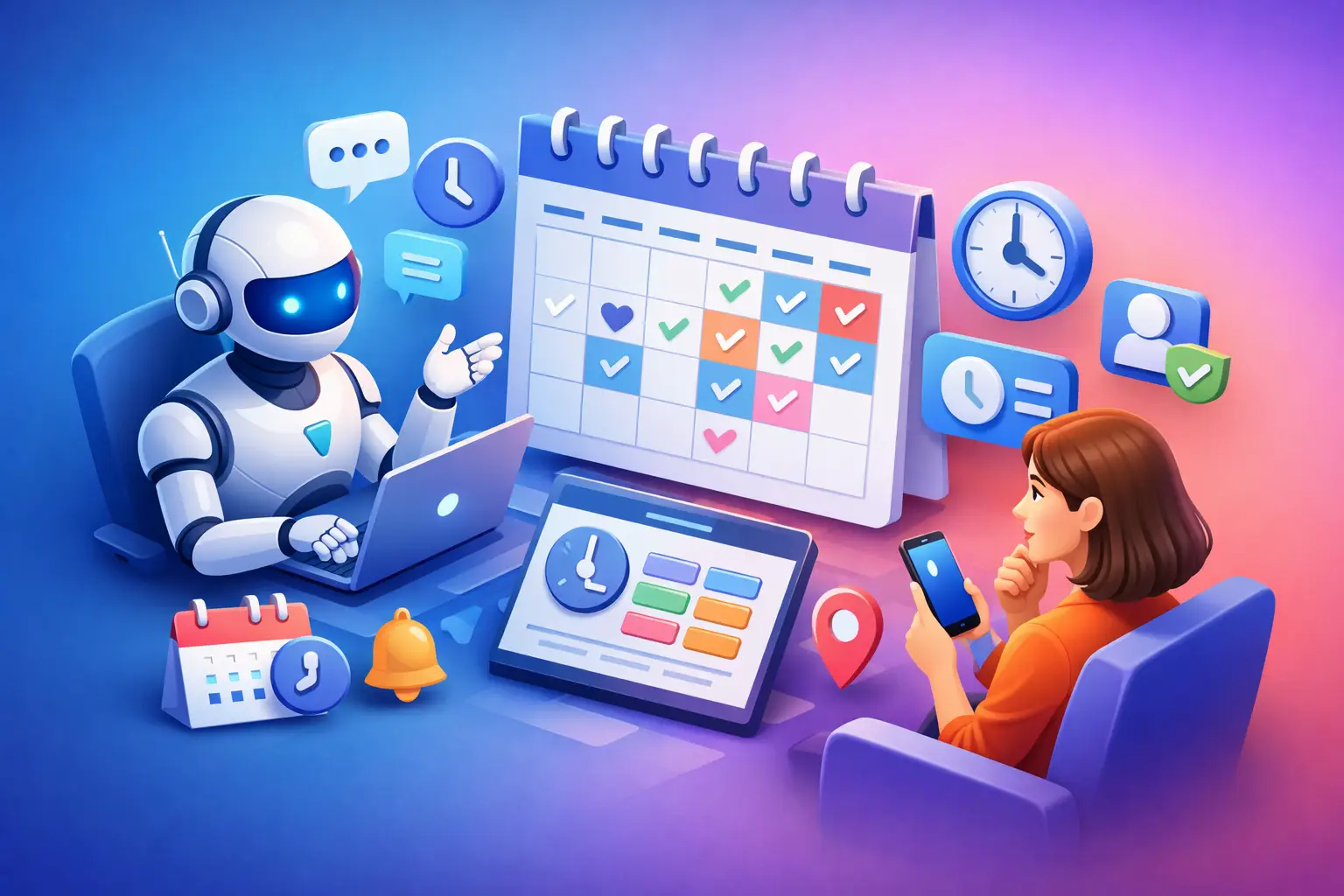
A missed call at 4:57 PM can turn into a lost appointment by 5:05. For service businesses, that gap matters. So when owners ask, can AI book customer appointments, they are usually asking a more practical question: can it reliably handle the front desk work that drives revenue without creating new problems?
The short answer is yes. AI can book customer appointments when the scheduling process has clear rules, accurate availability, and defined communication steps. It can answer inbound inquiries, collect customer details, offer time slots, confirm bookings, and send follow-ups. In many appointment-based businesses, that covers a large share of what a receptionist handles every day.
The better question is where AI performs well, where it needs guardrails, and what kind of operation gets the most value from it.
Can AI book customer appointments in real business workflows?
Yes, and in many cases it does the job faster than a busy front desk. An AI receptionist can respond the moment a call, text, or web inquiry comes in. Instead of sending the customer to voicemail or making them wait on hold, it can collect the reason for the visit, check appointment availability, and move directly into scheduling.
That speed matters because booking conversion often depends less on persuasion and more on response time. If a customer reaches out to schedule a cleaning, consultation, inspection, treatment, or estimate, they usually want the next available option that fits their schedule. A delayed reply creates friction. AI reduces that delay.
This is especially useful for businesses that deal with after-hours inquiries, lunch-break call spikes, or thin front-desk coverage. A human team can still manage exceptions and higher-touch conversations, but AI can keep the scheduling pipeline moving when staff are tied up.
What AI is actually doing when it books appointments
AI appointment booking is not guesswork. In a well-configured system, it follows a defined operating process.
It starts by identifying intent. Is the caller trying to book, reschedule, cancel, ask a question, or leave a message? From there, the system gathers the information needed to place the appointment correctly. That could include the customer name, contact details, service type, preferred timing, provider preference, and any intake details the business requires.
Then it checks availability against scheduling rules. Those rules might include appointment length, service categories, buffer times, staff calendars, location, business hours, or booking windows. Once a valid slot is available, the AI offers options, confirms the selected time, and records the appointment.
After booking, it can send confirmation messages, reminders, and follow-ups. That matters because appointment handling is not just about filling the calendar. It is about reducing no-shows, preventing scheduling confusion, and keeping communication consistent.
Where AI appointment booking works best
AI performs best in environments where appointment logic is consistent. If your business offers standard services with defined durations and clear booking rules, AI can handle a high volume of scheduling without much friction.
That includes many service-based operations such as dental offices, med spas, legal consultations, home service estimates, repair visits, salons, wellness practices, and other appointment-driven businesses. These operations often share the same core challenge: inquiries arrive all day, but staff attention does not scale as easily.
AI is also effective when the front desk is losing opportunities for simple reasons. Calls go unanswered. Messages sit too long. Staff have to interrupt in-person work to answer repetitive scheduling questions. The issue is not lack of demand. It is lack of coverage and consistency.
An AI receptionist is a strong fit when the business wants every inbound inquiry acknowledged quickly, every booking request routed into a process, and every appointment confirmed the same way each time.
Where it depends
AI is not equally suited to every scheduling situation. Some businesses have appointment workflows that are straightforward. Others have edge cases that require human judgment.
If bookings depend on clinical triage, insurance verification, complex resource coordination, or highly customized intake, AI should not operate without clear constraints. It can still help by handling the first contact, collecting required information, and routing the case correctly, but it may not be the right tool to finalize every appointment on its own.
The same goes for businesses with loosely managed calendars. If availability is not current, staff schedules change constantly without updates, or appointment types are not standardized, automation will expose those process gaps quickly. AI works best when it is connected to a scheduling system the business already trusts.
So the answer is not just can AI book customer appointments. It is can your scheduling operation support automated booking with accurate rules. If the answer is yes, AI can do a lot. If the answer is not yet, the first step is tightening the workflow.
The operational benefits are bigger than booking alone
Most businesses start evaluating AI because they want more appointments booked. That is a valid goal, but the operational upside usually goes further.
First, AI improves coverage. It can answer after hours, during busy periods, and when staff are unavailable. That reduces missed calls and captures leads that would otherwise disappear.
Second, it improves speed-to-lead. A fast response often decides whether the customer books with you or keeps calling around. AI shortens that gap from minutes or hours to seconds.
Third, it reduces administrative load. Staff spend less time repeating availability, collecting basic information, and sending confirmations. That gives the team more capacity for in-office service and exception handling.
Fourth, it standardizes communication. Customers get the same booking flow, the same confirmation steps, and the same reminders every time. That consistency is hard to maintain across manual front-desk coverage, especially when staffing changes.
For operators, that means appointment handling becomes less dependent on who is available to answer the phone at a given moment.
Common concerns about letting AI handle appointments
The most common concern is accuracy. Business owners worry that AI will book the wrong service, choose the wrong slot, or miss context that a human would catch. That concern is reasonable. The fix is not blind trust. The fix is process design.
AI should be configured around real appointment rules, not broad assumptions. Service types need clear definitions. Calendars need reliable availability. Escalation paths need to be built in. When those pieces are in place, booking accuracy becomes a systems issue, not a personality issue.
Another concern is customer experience. Some operators assume customers will resist talking to AI. In practice, most customers care more about getting helped quickly than about whether the first response comes from a person or an automated receptionist. If the interaction is clear, responsive, and gets the appointment booked, the experience usually feels efficient rather than impersonal.
There is also the issue of exceptions. A good AI receptionist should not pretend every situation is simple. It should know when to hand off, when to capture a message, and when to route the inquiry to staff. That is part of doing the job well.
What to look for if you want AI to book appointments well
If you are evaluating solutions, focus less on flashy AI claims and more on receptionist performance. Can it answer inbound inquiries immediately? Can it follow your scheduling rules? Can it confirm, reschedule, and communicate with customers consistently? Can it reduce missed opportunities without creating scheduling cleanup for your staff?
You should also look at how it fits into day-to-day operations. A useful system does not just sound intelligent. It supports actual front-desk throughput. That means handling appointment volume, protecting calendar accuracy, and keeping customer communication moving.
For businesses that depend on appointments, the best automation is not a general chatbot trying to do everything. It is a dedicated receptionist layer focused on booking, routing, and follow-through. That is where tools like Ortuas align with the real operational need.
So, can AI book customer appointments effectively?
Yes, if the scheduling workflow is structured and the system is built for receptionist work. AI can handle a meaningful share of appointment booking, especially for businesses that need faster response times, broader coverage, and less manual front-desk strain.
It is not a replacement for judgment in every edge case. It is a practical way to make sure routine inquiries get handled, calendars keep moving, and customers are not left waiting for a callback that comes too late.
If your business runs on appointments, the real cost is rarely the software. It is the revenue lost when nobody answers, nobody follows up, and nobody books the customer while they are ready to say yes.
Get tips like this in your inbox
We send practical guides on AI, automation, and growing your service business. No spam.