8 Best Ways to Fill Cancellations Faster
September 17, 2026
Use the best ways to fill cancellations: fast outreach, waitlist automation, flexible scheduling, and reliable follow-up that protects revenue every day.
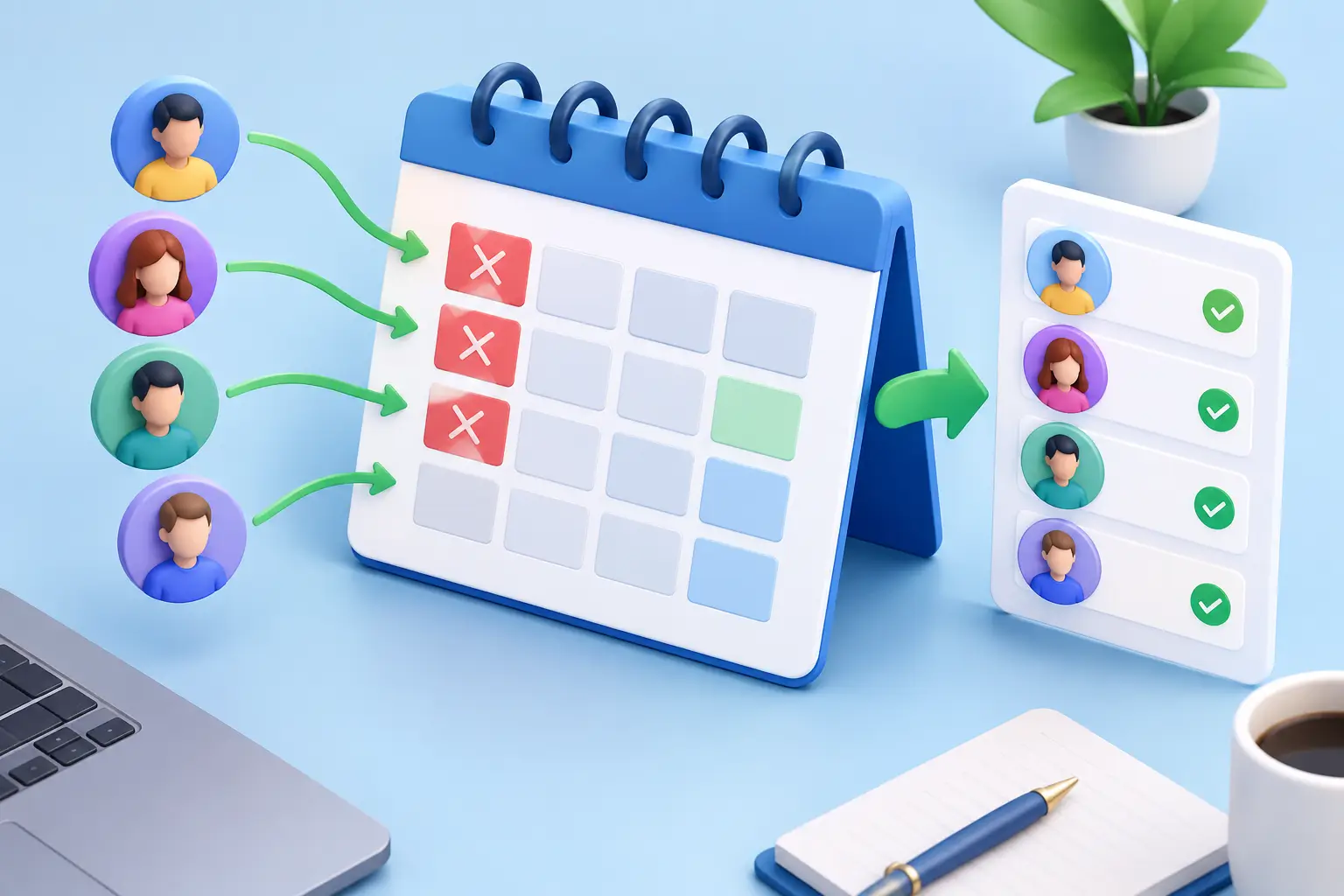
A cancellation is not just an empty slot on the calendar. For an appointment-driven business, it can mean lost production, staff time that cannot be recovered, and a customer who may not rebook. The best ways to fill cancellations start with one operational standard: treat an opening as a time-sensitive opportunity, not an administrative task to handle when the front desk gets a chance.
A strong cancellation process protects revenue without creating more work for your team. It combines clear policies, a prioritized waitlist, immediate communication, and scheduling coverage that responds even when the office is busy or closed.
1. Act on cancellations immediately
The likelihood of filling an opening drops as the calendar sits untouched. A same-day cancellation needs outreach within minutes, while a cancellation later in the week should trigger outreach before customers make other plans.
Create a defined workflow for every cancelled appointment. Once the slot is released, your scheduling system or receptionist should identify the appointment type, provider, location, and available duration. Then it should contact the right customers instead of sending a generic message to everyone.
Speed matters because customers who want an earlier appointment often book the first reasonable option they see. If your team is tied up on calls, checking in customers, or handling a busy counter, manual follow-up can easily arrive too late.
2. Build a waitlist that is actually usable
A waitlist only works when it contains current, actionable information. A spreadsheet of names is not enough. For each customer, capture the service they need, preferred provider or staff member, acceptable days and times, how much notice they need, and their preferred contact method.
Ask one practical question during booking: “Would you like an earlier appointment if one becomes available?” That answer creates a pool of people who have already expressed interest in moving sooner. It also prevents staff from spending time calling customers who have no flexibility.
Segment the list by appointment type and availability. A 30-minute consultation cannot fill a 90-minute service block, and a customer seeking an evening appointment may not want a Tuesday morning opening. Matching the opening accurately improves conversion and reduces back-and-forth.
Keep the waitlist current. Remove customers after they are booked, confirm that their contact details are correct, and refresh old requests periodically. A smaller, accurate waitlist will outperform a large one that produces unanswered texts and outdated preferences.
3. Offer openings in the right order
Not every open appointment has the same value, and not every waiting customer should receive the first offer. Prioritize based on fit, urgency, and the likelihood of confirmation.
Start with customers who requested that exact service and have a stated availability match. Next, contact customers who are already booked farther out and might prefer the earlier time. For premium or longer appointment blocks, it may make sense to prioritize high-value services that protect the day’s production target.
Set a short response window. For example, give the first contact 10 or 15 minutes to claim a same-day opening before offering it to the next person. Waiting hours for a response turns a fillable cancellation into dead time. The message should make the deadline clear while remaining professional: the appointment is available now, and confirmation is required to hold it.
4. Use more than one communication channel
A phone call is useful for urgent openings, but it should not be your only option. Many customers will see a text faster than they will answer an unfamiliar number. Others prefer email for appointments that are several days away.
The most effective outreach sequence depends on the lead time. For an appointment opening within a few hours, send a text and call if there is no quick response. For an opening later in the week, a text or email may be enough, followed by a reminder if the slot remains available.
Keep every message short and specific. Include the appointment type, date, time, location if relevant, and the action needed to confirm. Do not make customers call back simply to learn whether the opening works for them. Friction lowers response rates.
An AI receptionist can manage this work consistently by contacting qualified waitlist customers, answering basic scheduling questions, and confirming the appointment once the customer accepts. Ortuas is designed for this receptionist function: handling inbound inquiries and appointment communication without leaving cancellations dependent on staff availability.
5. Make rescheduling easier than cancelling
Some cancellations happen because customers need a different time, not because they no longer need your service. If the only option is to cancel and call back later, the business risks losing the appointment entirely.
Give customers a simple way to reschedule during the cancellation process. Present a limited set of suitable alternatives based on the service, staff availability, and scheduling rules. When customers can move directly into another time, you preserve the booking and reduce the number of openings that need to be filled.
This is especially valuable for recurring services, consultations, and appointments with longer lead times. A customer who cancels today may still be ready to book next week. Capture that intent before the interaction ends.
6. Set cancellation policies that support recovery
A cancellation policy should create accountability without making customers feel punished for legitimate changes. The right policy depends on your industry, appointment value, demand level, and how easily the slot can be filled.
For high-demand schedules, a 24- or 48-hour notice requirement may be appropriate. For longer services or specialized staff time, deposits or card-on-file requirements can reduce late cancellations. But a strict policy alone does not fill the calendar. It must be paired with a fast recovery process when an opening still occurs.
Communicate the policy at booking, in confirmation messages, and in reminders. Customers are more likely to comply when expectations are clear before they need to change an appointment. Apply the policy consistently, but leave room for reasonable discretion. A long-term customer with a genuine emergency should not be handled the same way as a repeat late canceller.
7. Use confirmations and reminders to prevent avoidable gaps
The cheapest cancellation to fill is the one that never happens. Automated confirmations give customers a chance to correct a scheduling mistake early. Reminder messages reduce forgotten appointments and give customers enough notice to reschedule if a conflict appears.
Timing should match the service. Many businesses benefit from a confirmation immediately after booking, a reminder several days before the appointment, and a final reminder 24 hours before. High-value appointments may justify an additional confirmation request.
Make reminders useful rather than repetitive. Include the appointment details, preparation instructions when needed, cancellation terms, and a direct option to confirm or reschedule. A customer who can reply quickly is more likely to communicate before the slot becomes a last-minute problem.
8. Measure what happens after every cancellation
Without tracking, cancellations can feel like an unavoidable cost of doing business. The data often shows a clearer operational issue: slow response times, weak reminders, poor waitlist quality, or appointment types that are consistently difficult to refill.
Review a few numbers each month: cancellation rate, late-cancellation rate, percentage of cancelled slots refilled, average time to refill, and recovered revenue. Break the results down by service type, day of week, provider, and booking lead time. Patterns will tell you where to adjust staffing, availability, policies, or messaging.
Also measure the source of replacement bookings. If most filled slots come from a waitlist, invest in growing and maintaining that list. If customers respond best to text messages, make text the default for urgent openings. If staff misses after-hours cancellation notices, extend reception coverage so the recovery process begins before the next business day.
A full schedule is rarely the result of one tactic. It comes from a dependable system that notices every opening, reaches the right customer quickly, and makes confirmation easy. Build that system around your actual workflow, then review it often enough that an empty slot becomes an exception rather than accepted lost revenue.
Get tips like this in your inbox
We send practical guides on AI, automation, and growing your service business. No spam.