AI Receptionist for Overflow Calls That Converts
April 24, 2026
An AI receptionist for overflow calls helps service businesses capture more leads, book faster, and reduce missed inquiries without adding staff.
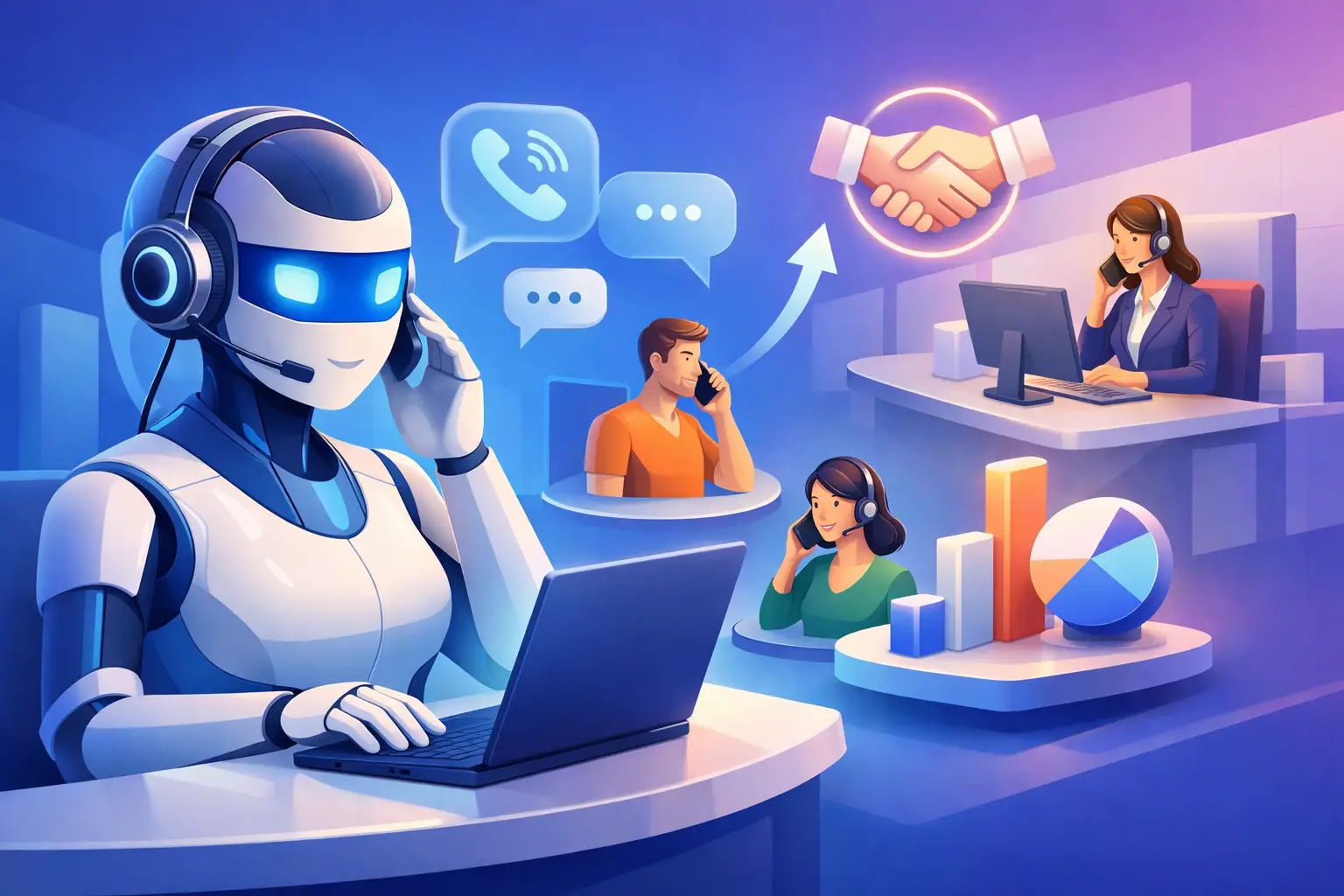
When the front desk is tied up, every extra ring costs something. It might be a new patient who books elsewhere, a returning client who gives up, or a lead that never makes it into your schedule. An ai receptionist for overflow calls fixes that gap by answering the calls your team cannot reach in time, keeping appointment requests moving instead of letting them stall in voicemail.
For appointment-driven businesses, overflow is rarely a rare event. It happens during lunch coverage, while staff are checking in customers, when multiple calls hit at once, and after hours when people finally have time to call. The problem is not just call volume. It is the mismatch between when customers reach out and when your team is free to respond.
What an AI receptionist for overflow calls actually does
An AI receptionist for overflow calls is not a generic chatbot with a phone number attached. In a receptionist role, the job is specific. It answers inbound calls when your live staff are unavailable, gathers the reason for the call, responds to common questions, routes urgent matters correctly, and handles appointment-related tasks based on your workflow.
That can include booking new appointments, confirming availability, collecting callback details, sending follow-up messages, and documenting the interaction so your team is not starting from scratch later. For businesses that depend on speed-to-lead, this matters because the first response often determines whether the caller becomes a booked appointment or a missed opportunity.
The best systems do not try to replace every human interaction. They cover the predictable, repeatable receptionist work that creates delays when your team is overloaded. That is what makes overflow coverage valuable. You are not redesigning your business around AI. You are removing a common failure point at the front desk.
Why overflow calls are more expensive than they look
Most businesses already know missed calls are bad. What gets underestimated is the compound effect. One unanswered call can mean a lost appointment. Ten unanswered calls in a week can mean underused schedule capacity, weaker ad return, and more pressure on staff to chase people back.
There is also a customer experience issue. When callers hit voicemail during normal business hours, they often assume the office is disorganized or unavailable. That perception matters in legal offices, med spas, dental practices, home services, and any operation where responsiveness signals professionalism.
Overflow also creates internal drag. Staff stop what they are doing to catch up on messages. Callback lists grow. Scheduling gets fragmented across calls, texts, and sticky notes. A receptionist team that is always catching up has less time to give focused attention to the customers already in front of them.
An AI layer changes that by handling the spike instead of letting it become backlog.
Where an AI receptionist for overflow calls works best
This model is especially effective in service businesses where most inbound calls follow familiar patterns. Appointment requests, reschedules, office hours, service questions, insurance or pricing basics, intake steps, and location details are all well suited for AI-assisted handling.
It is also a strong fit for offices with uneven call demand. Many businesses do not need another full-time receptionist. They need coverage for the 20 percent of the day when call volume exceeds capacity. Overflow automation fits that reality better than hiring around peak moments.
After-hours coverage is another practical use case. A caller who reaches out at 8:30 p.m. may not expect a human to answer, but they do expect a response path that feels useful. If they can ask a question, request an appointment, and get confirmation that the office has their information, the business stays in motion while the team is off the clock.
What to look for in a system
If you are evaluating an ai receptionist for overflow calls, the key question is not whether it sounds impressive. The question is whether it can operate inside your real front-desk process.
First, it should handle appointment workflows, not just message taking. Capturing a name and number is better than missing the call, but it still leaves your team with manual follow-up. Booking, confirming, and routing based on availability create the bigger operational gain.
Second, it should deliver consistency. Customers should get accurate answers to common questions and a clear path when their request needs a human. Reliability matters more than novelty here.
Third, the handoff has to be clean. Some calls should go to staff. Billing disputes, sensitive cases, complex treatment questions, or emotionally charged situations may still need a person. Good overflow coverage does not hide that. It triages effectively and gets the right calls to the right place.
Fourth, the system should support ongoing communication. A receptionist function does not stop when the call ends. Appointment confirmations, reminders, and follow-up messages are part of the same workflow. If those steps remain manual, the office still carries unnecessary admin load.
The trade-offs to think through
There is no receptionist model that solves every scenario equally well. AI works best when the business has repeatable call types and a clear scheduling process. If your front desk handles highly specialized, case-by-case conversations all day, the value may come more from after-hours capture and basic overflow routing than from full appointment automation.
Voice quality and escalation logic also matter. If the system cannot recognize when a caller is frustrated or when a situation is urgent, the experience can feel rigid. That is why setup is not just technical. It is operational. You need defined call intents, routing rules, scheduling logic, and fallback paths.
Some teams also worry that automation will feel impersonal. That concern is fair, but it depends on the alternative. For many callers, a fast answer and a confirmed next step feels better than voicemail and a delayed callback. The standard is not perfection. The standard is whether the experience is more responsive and more reliable than what happens now.
How to implement overflow coverage without disrupting the front desk
Start with your busiest failure points. Look at when calls are missed, what types of calls are most common, and which ones directly affect bookings. That gives you the first set of workflows to automate.
Then define where AI should answer and where staff should step in. Some businesses use overflow only when all live lines are busy. Others use it after hours, during lunch breaks, or for first-response intake before transferring qualified calls. The right setup depends on call patterns and staffing structure.
Next, make sure scheduling rules are accurate. An AI receptionist is only as useful as the calendar access, availability logic, and appointment types behind it. If your booking rules are messy, automation will expose that quickly.
Finally, measure business outcomes instead of vanity metrics. The real indicators are missed call rate, booked appointments, response time, callback volume, and front-desk workload. If those numbers improve, the system is doing its job.
The operational payoff
The strongest case for overflow automation is not labor reduction by itself. It is throughput. More inquiries get answered. More appointment requests get captured. Fewer leads disappear between first contact and follow-up. Staff spend less time playing catch-up and more time handling high-value interactions.
That shift is especially useful for growing service businesses. Hiring more front-desk staff adds cost, training time, scheduling complexity, and turnover risk. An AI receptionist gives you coverage that scales with call volume without turning reception into a hiring problem.
For operators in busy local markets, including practices and service businesses around Fredericksburg and the Hill Country, this can create a measurable edge. When customers compare providers, responsiveness often wins before service quality is ever tested.
A focused provider like Ortuas fits this need because the system is built around receptionist work itself - answering inquiries, managing appointments, and maintaining customer communication when your team is occupied.
Why this matters now
Customers have gotten less patient, not more. If they are ready to book, they expect the business to be reachable. That expectation does not pause because your team is helping someone else, short-staffed, or done for the day.
An ai receptionist for overflow calls gives you a practical way to meet that expectation without overbuilding your front desk. It keeps the phones from becoming a leak in your revenue process. And for most appointment-driven businesses, that is the real goal: not a flashy AI project, but a reception system that answers, books, and follows through when demand shows up.
The best time to fix missed-call problems is before your schedule feels light and your team feels overwhelmed for reasons nobody can quite see.
Get tips like this in your inbox
We send practical guides on AI, automation, and growing your service business. No spam.