AI Receptionist for Dental Practice Example
June 23, 2026
See an ai receptionist for dental practice example, including call flows, scheduling logic, and where automation improves booking and front-desk coverage.
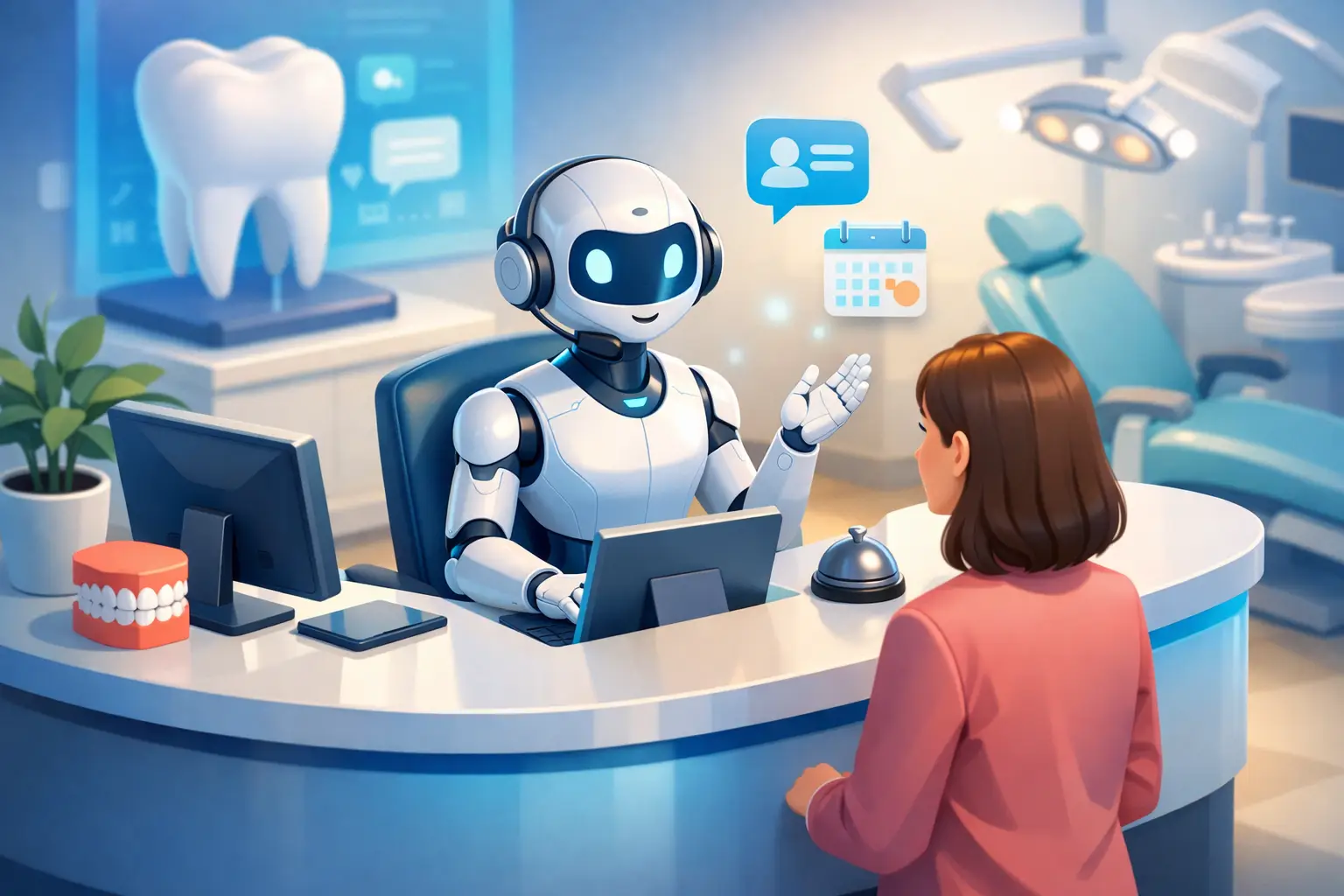
Monday at 8:07 a.m., the front desk is already behind. One patient is checking in, another is asking about an insurance claim, and two calls hit at once - one from a new patient who wants the next available cleaning and one from a parent trying to reschedule an afternoon appointment. That is exactly where an ai receptionist for dental practice example becomes useful: not as a novelty, but as a practical layer that catches demand, handles routine scheduling, and keeps the day from starting in a backlog.
For dental offices, the front desk is a revenue function. When calls go unanswered, new-patient bookings slip. When staff spend too much time on repetitive scheduling questions, confirmation work and patient follow-up get pushed later. An AI receptionist works best when it takes the first pass on high-volume, repeatable communication while the in-office team stays focused on patients, exceptions, and higher-value conversations.
What an AI receptionist for dental practice example should actually show
A useful example is not just a transcript of a chatbot answering basic questions. It should show how the system handles real front-desk work: answering inbound calls, qualifying the patient, offering appointment options, confirming details, and routing edge cases to staff when needed.
In a dental setting, that usually means the AI receptionist can respond to common requests like new-patient booking, hygiene recall scheduling, appointment rescheduling, office hours, basic service questions, and confirmation messaging. It also needs guardrails. If someone mentions severe pain, swelling, trauma, or billing disputes that require a human review, the workflow should escalate instead of forcing automation where it does not fit.
The strongest examples also show timing. Dental practices do not only need help during lunch or after 5 p.m. They need consistency at the busiest moments of the day, when the team is technically available but operationally overloaded.
A realistic call flow example
Here is a practical ai receptionist for dental practice example based on a common scenario: a missed inbound call from a prospective new patient, followed by automated recovery and scheduling.
Scenario: new patient inquiry after hours
A patient calls at 7:42 p.m. looking for a cleaning appointment. No one at the office answers because the practice is closed.
The AI receptionist answers immediately:
"Thanks for calling Green Valley Dental. I can help you book an appointment, reschedule an existing visit, or answer common office questions. Are you a new or existing patient?"
The caller says they are a new patient.
The AI continues:
"Great. Are you looking for a routine cleaning and exam, or do you need help with a specific issue?"
The patient says routine cleaning.
The system asks for a few booking details: preferred day, morning or afternoon preference, and whether the patient has dental insurance. It then offers the next available openings that match the practice's schedule rules.
"I have openings Tuesday at 10:30 a.m. or Thursday at 2:00 p.m. Which works better for you?"
The patient chooses Thursday at 2:00 p.m.
The AI collects name, phone number, and email, confirms the appointment, and triggers a follow-up text with intake instructions.
That is the core use case. The office did not lose the lead, the patient did not wait until the next day to call a different provider, and the schedule was filled without staff intervention.
Scenario: existing patient reschedule during peak hours
Now take a second example. It is 12:15 p.m., phones are ringing, and one hygienist is running late. An existing patient calls to move a 3:00 p.m. appointment.
The AI receptionist verifies the patient, identifies the existing appointment, and offers approved alternative slots based on the provider's schedule. Once the patient selects a new time, the system updates the calendar and sends confirmation.
This sounds simple, but it removes a high-frequency interruption from the front desk. Across dozens of calls each week, that time adds up fast.
Where automation helps most in a dental office
Dental practices are a strong fit for receptionist automation because much of the communication follows repeatable patterns. New patients ask about availability, insurance participation, location, and first-visit process. Existing patients ask to confirm, move, or cancel appointments. The office sends reminders and recall prompts. These are front-desk tasks with clear workflows.
That does not mean every conversation should be handled by AI. Treatment coordination, complex billing discussions, upset patients, and unusual clinical questions still belong with trained staff. The operational goal is narrower and more useful: automate the routine work that creates volume, then route exceptions cleanly.
For most offices, the highest-impact use cases are missed-call capture, after-hours coverage, appointment scheduling, confirmation messaging, and rescheduling. If a practice has a steady flow of inbound calls and even a modest missed-call rate, the return becomes visible quickly. One saved new-patient booking can matter more than dozens of answered FAQs.
The scheduling logic matters more than the script
A polished voice experience is helpful, but the real value comes from scheduling accuracy. If the system cannot follow provider availability, appointment types, time buffers, new-patient rules, and business-hour constraints, it creates cleanup work instead of reducing it.
A strong implementation understands the difference between a new-patient exam, a hygiene recall, and a problem-focused visit. It should know whether certain slots are reserved, whether same-day bookings are allowed, and when to avoid double-booking edge cases. In other words, the AI receptionist should behave like a disciplined front-desk process, not just a friendly voice.
This is where dental practices should be careful. Some tools sound impressive in a demo but fall apart when they meet the realities of a production schedule. The better approach is to start with defined workflows, narrow the scope to the highest-volume appointment types, and expand only after the core flows are reliable.
What a good implementation looks like in practice
A practical rollout usually starts small. The office identifies the top call reasons, maps the required responses, and connects the AI receptionist to scheduling and messaging systems. Then it tests for the situations that create friction: duplicate patient records, unclear insurance responses, provider-specific availability, and urgent symptoms.
Once live, the office should watch a few operational metrics closely. The first is missed-call capture rate. The second is booked appointments from inbound inquiries. The third is staff time recovered from routine scheduling work. If those numbers improve without adding correction work for the team, the system is doing its job.
This is also where a receptionist-focused platform has an advantage. A general chatbot may answer broad questions, but front-desk operations require something more specific: structured appointment handling, consistent intake, and reliable communication workflows. That is the lane Ortuas is built for.
Trade-offs dental practices should expect
There is no perfect automation layer, and dental offices should evaluate AI reception with that in mind. The biggest trade-off is between coverage and complexity. It is relatively easy to automate common scheduling paths. It is harder to automate conversations with incomplete information, emotional tension, or unclear clinical need.
Accent variation, background noise, and patient phrasing can also affect voice interactions. That does not make the model ineffective, but it means the handoff path to staff needs to be clean and fast. A good system should never trap patients in a loop.
There is also an operational choice around brand experience. Some practices want the AI to handle only after-hours calls and overflow. Others want broader coverage throughout the day. The right setup depends on call volume, staffing levels, and how standardized the office's scheduling rules are.
For a smaller office, even limited deployment can make sense if the main problem is missed leads after hours. For a multi-provider location with heavy call volume, broader automation may be worth it because the front desk is spending too many hours on repeatable tasks.
How to evaluate an AI receptionist for your practice
If you are looking at an ai receptionist for dental practice example and deciding whether it fits your office, focus less on the novelty and more on operational proof. Can it answer every inbound call? Can it book and modify appointments accurately? Can it send confirmations and follow-ups consistently? Can it escalate the right calls instead of creating patient frustration?
You should also ask what happens when things are messy, because they often are. If a patient calls with a toothache but also wants to ask about insurance, does the workflow route intelligently? If a caller is a new patient but the requested appointment type needs manual review, does the system capture the lead and pass it to staff with enough detail to follow up quickly?
Those questions matter more than flashy AI claims. Dental offices do not need a broad artificial intelligence platform. They need dependable front-desk coverage that protects booking volume and reduces admin drag.
The best example is not the one with the fanciest script. It is the one that shows a missed call turning into a confirmed appointment, a reschedule happening without staff interruption, and a busy front desk getting breathing room without sacrificing patient experience. If the system can do that consistently, it is not just answering phones. It is improving how the practice runs.
A useful place to end is this: the right AI receptionist should make your front desk more consistent on its busiest day, not just more efficient on a quiet one.
Get tips like this in your inbox
We send practical guides on AI, automation, and growing your service business. No spam.