AI Receptionist for Appliance Repair Shops
August 2, 2026
An AI receptionist for appliance repair captures every call, books qualified jobs, and keeps customers informed without adding front-desk labor costs daily.
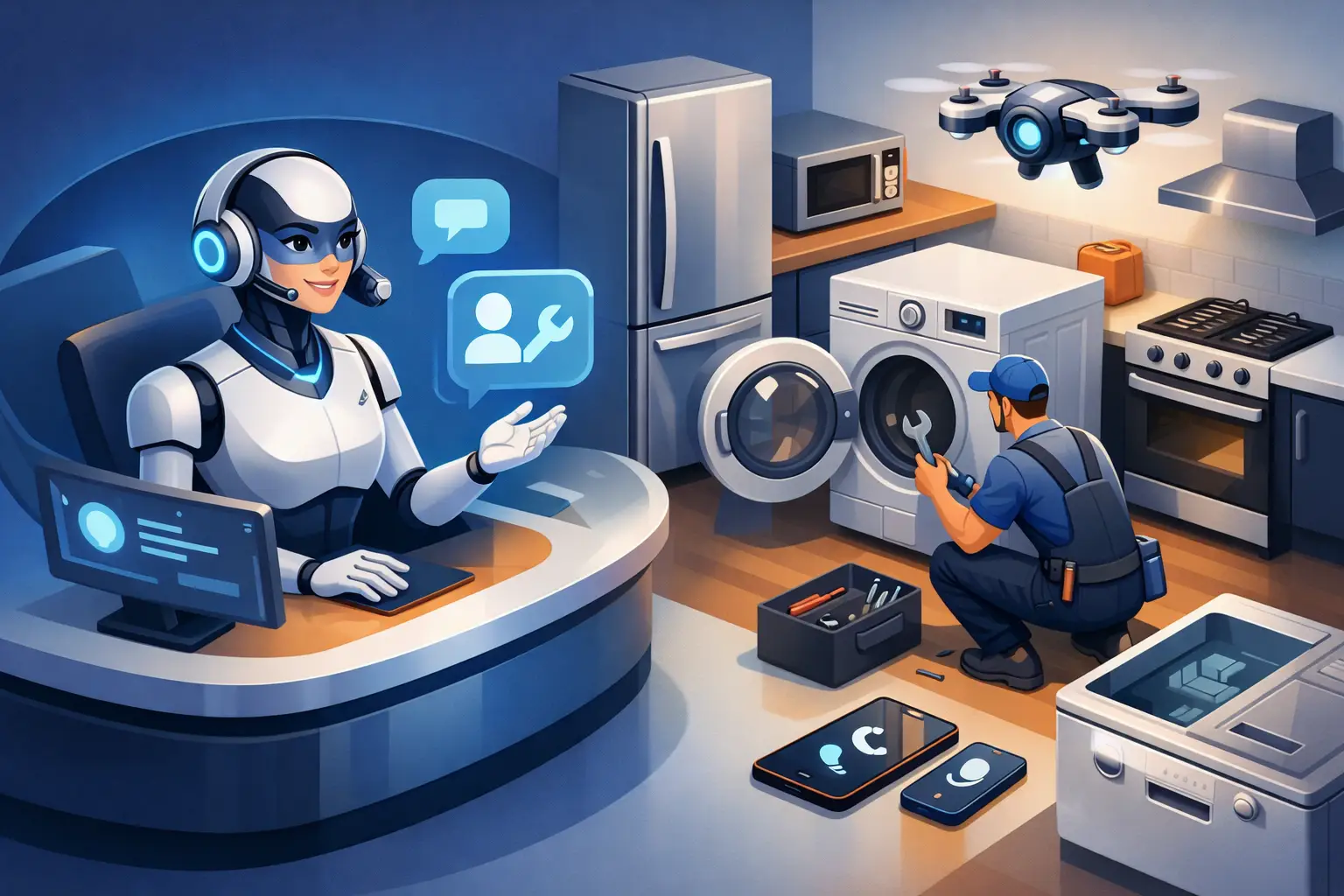
A refrigerator stops cooling at 7:15 p.m. The customer is not comparing service companies for long. They call the first business that answers, explains the next step clearly, and offers an appointment. An AI receptionist for appliance repair helps make sure that opportunity is not lost because the office is closed, the dispatcher is already on another call, or a technician cannot safely answer while driving.
For appliance repair businesses, the front desk is not just an administrative function. It is where new jobs are won or lost, urgent situations are sorted, appointment expectations are set, and customers decide whether the company feels dependable. A capable AI receptionist provides consistent coverage for those moments without requiring another full-time hire.
Why missed calls cost appliance repair shops more than they think
Most appliance repair calls have immediate intent. The caller has a dishwasher leaking, an oven that will not heat, or a washing machine that has stopped mid-cycle. They generally want to know three things: whether the company services their appliance, whether someone can come out soon, and what happens next.
When nobody answers, many callers do not leave a voicemail. They move to the next listing. That creates a costly gap between the marketing spend that generated the call and the revenue the business could have earned from the repair.
Traditional reception coverage has limits. Office staff may be helping a walk-in customer, processing payments, calling suppliers, or coordinating technicians. Coverage also becomes thinner during lunch, after hours, weekends, and busy seasonal periods. Adding staff can solve some of the problem, but it adds payroll, training time, scheduling complexity, and the risk of inconsistent call handling.
An AI receptionist gives the business a reliable first response whenever a customer reaches out. Rather than asking a technician to interrupt a repair or leaving callers to voicemail, it can gather the details needed to move the request forward.
What an AI receptionist for appliance repair should handle
The goal is not to replace technical diagnosis over the phone. It is to handle reception work accurately, quickly, and consistently so the team can focus on repairs and exceptions.
A useful system answers inbound calls and messages, identifies whether the caller is a new or existing customer, and collects the information needed to schedule or route the request. For appliance repair, that commonly includes the appliance type, brand, service address, basic issue, preferred appointment time, and callback information.
It should also answer routine questions within the boundaries the business sets. That may include service area coverage, operating hours, appointment availability, preparation instructions, diagnostic-fee policies, or whether the company works on a particular appliance category. Clear answers reduce repetitive office work and help customers reach a decision faster.
Appointment handling is where the operational value becomes especially clear. The receptionist should offer available times based on the company’s scheduling rules, confirm the booking, and send a follow-up confirmation. Customers receive a clear next step, while office staff start the day with more complete job details.
For issues that require human judgment, the system should know when to escalate. A safety concern involving gas, smoke, sparking, or flooding should be routed according to a defined process, not handled like a standard scheduling request. Likewise, warranty disputes, commercial accounts, unusual equipment, and highly frustrated callers may need a team member’s involvement.
Better booking starts with better intake
An incomplete service request creates extra work later. A dispatcher may need to call back for an address, appliance brand, unit model, or a clearer description of the problem. The customer may miss that callback, and the appointment becomes harder to schedule.
Structured intake prevents much of this friction. When the initial conversation captures the right information, the business can assign the appropriate technician, prepare for common parts needs, and set realistic expectations before the truck rolls.
That does not mean every call needs a long interrogation. Customers calling about a broken refrigerator want help, not a 10-minute form. The best approach is focused: collect enough information to qualify the job and schedule it, then allow the technician to diagnose the specific failure onsite.
A practical intake flow usually distinguishes between appliance categories, residential and commercial requests, location, urgency, and customer availability. It can also flag whether the appliance is under warranty or whether the caller has a prior appointment. These details make the handoff more useful without slowing the conversation down.
Coverage after hours is a conversion advantage
After-hours coverage is especially valuable in appliance repair because the customer’s schedule often drives when they search. Homeowners may start calling after work. Restaurant managers may notice equipment trouble after closing. Property managers may need help outside standard office hours.
An AI receptionist can answer those inquiries immediately, capture the job details, and offer the next available appointment based on the schedule rules provided. If the business does not offer same-day or emergency service, it can state that plainly while still giving the caller a path to book.
This is a key trade-off: faster response does not mean promising service the company cannot deliver. The receptionist must reflect actual availability, service boundaries, and policies. Accurate expectations protect the customer experience and prevent dispatch problems the next morning.
For shops serving a broad region or a concentrated area such as Fredericksburg and the Hill Country, clear service-area rules are equally important. The system should avoid scheduling work outside the coverage zone unless the business has approved those jobs.
Consistency matters as much as speed
Customers judge a service company before a technician arrives. A rushed response, an unclear fee explanation, or a missed confirmation can make a capable repair operation seem disorganized. Consistent reception gives every caller the same professional starting point.
That consistency also helps the internal team. Office managers can standardize how service requests are captured, which questions are asked, and when appointments are confirmed. Instead of depending on each staff member to remember every detail, the business establishes a repeatable workflow.
This is not a case for removing people from every customer interaction. Human staff remain essential for exceptions, complex conversations, technician coordination, and relationship-based accounts. The advantage of AI coverage is that it handles repetitive reception tasks reliably, allowing staff to spend more time where their judgment has the greatest impact.
How to implement AI reception without disrupting operations
Start with the call types that create the most missed opportunities. For many appliance repair companies, that means new service inquiries, appointment requests, and after-hours calls. Build the initial workflow around those high-volume, high-value interactions before expanding to other requests.
Next, define the operating rules. The receptionist needs approved answers for service areas, appliance types, business hours, diagnostic fees, appointment windows, cancellation policies, and escalation scenarios. A system is only as dependable as the rules behind it.
Then connect scheduling carefully. The AI should work from current availability and respect technician territories, job duration, blackout periods, and buffer time. If the calendar is inaccurate, the business will trade missed calls for booking errors. A controlled rollout with a limited set of appointment types can help validate the process before broader deployment.
Finally, review real conversations and outcomes. Look at how many calls were answered, how many requests became appointments, which questions repeatedly required escalation, and where callers abandoned the conversation. Those findings help refine prompts, policies, and scheduling logic over time.
Ortuas is built around this reception layer: answering inbound inquiries, capturing leads, handling appointment workflows, and maintaining customer communication without adding front-desk burden. For appliance repair operators, the priority is simple: every legitimate service request should receive a fast, accurate response and a clear path to booking.
The right measure is jobs captured, not calls automated
Automation should be evaluated by operational results, not novelty. A high call-answer rate is useful, but it matters most when it leads to qualified appointments, fewer abandoned inquiries, and less administrative rework.
Track booking conversion from inbound calls, response time, no-show rates, incomplete intake records, and the volume of calls handled outside office hours. Compare those numbers with the cost of current reception coverage and the revenue value of additional booked jobs. The right setup should improve both customer responsiveness and staff capacity.
A dependable receptionist does more than answer the phone. It makes the first step of getting service easy, even when the office is busy. For an appliance repair business, that can be the difference between another missed call and a full schedule built from the inquiries already coming in.
Get tips like this in your inbox
We send practical guides on AI, automation, and growing your service business. No spam.