AI Receptionist Appointment No Show Prevention
April 6, 2026
AI receptionist appointment no show prevention reduces missed visits with faster booking, smart reminders, and two-way follow-up workflows.
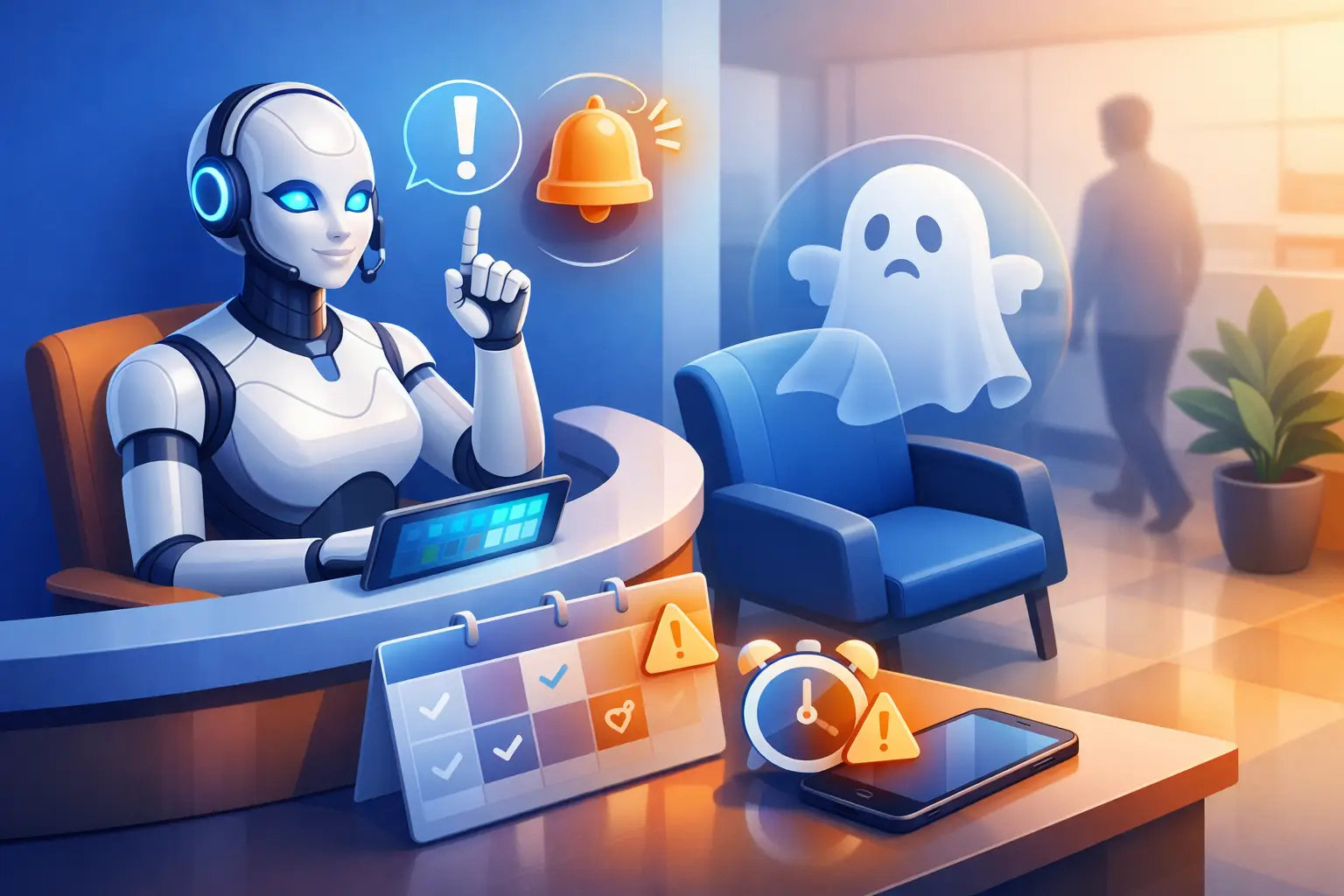
A full schedule looks good on paper. Revenue only shows up when people actually arrive.
That is why ai receptionist appointment no show prevention matters more than most scheduling teams realize. No-shows are rarely just a calendar problem. They are usually a communication problem - missed calls, delayed confirmations, unclear instructions, weak reminder timing, or no easy way for a customer to reschedule when plans change. An AI receptionist helps fix those gaps before they become empty time slots.
Why no-shows happen in the first place
Most missed appointments are not random. They come from predictable breakdowns in the front-desk workflow.
A caller reaches out after hours and never gets a response while intent is high. Someone books days in advance but receives no confirmation that the appointment is locked in. Another customer gets a reminder, but it arrives too early to be useful or too late to change the schedule. In many offices, the biggest issue is simple friction: the customer needs to adjust the appointment, but rescheduling requires a phone call during business hours, a hold time, or a callback that never happens.
That creates a familiar chain reaction. The customer does nothing, the office assumes the appointment is still on, and the slot goes unused.
An AI receptionist does not eliminate every no-show. Some people will still miss appointments because of illness, family emergencies, or poor planning. What it can do is reduce preventable no-shows by making communication immediate, consistent, and easy to act on.
How AI receptionist appointment no show prevention works
The practical value of an AI receptionist is not that it sounds advanced. It is that it handles the routine communication steps that busy front desks often cannot perform with perfect consistency.
When a prospect or customer calls, the system answers immediately, captures details, and helps book the appointment without forcing the person to wait for a staff member. That speed matters. The faster a booking is completed, the less likely the lead is to disappear or choose a competitor.
Once the appointment is on the calendar, prevention starts with confirmation. A reliable confirmation message closes the loop and reduces the chance that the customer forgets, misunderstands the time, or questions whether the booking was actually completed.
The next layer is reminder cadence. A good process usually includes more than one touchpoint. For example, a confirmation right after booking, another reminder far enough in advance to allow changes, and a final reminder close to the appointment. The exact timing depends on the business. A med spa, legal consultation, home service visit, and dental office all have different booking windows and customer behavior.
Then comes the part many teams overlook: two-way communication. Reminders work better when customers can respond. If someone needs to confirm, ask a question, or reschedule, the path should be immediate. An AI receptionist can keep that interaction moving without waiting for a human team member to pick it up.
The biggest operational advantage is consistency
Human reception teams do valuable work, but they are limited by volume, staffing, and shift coverage. When phones are busy, when lunch starts, when the office closes, or when one team member calls out, follow-up quality slips.
That is where no-show prevention breaks down. Not because the team does not care, but because communication becomes uneven.
An AI receptionist applies the same process every time. It answers inbound inquiries, confirms bookings, sends reminders, and supports rescheduling workflows without depending on who is at the desk that day. For operators, that consistency matters more than novelty. It creates a repeatable system instead of a best-effort one.
This is especially useful for businesses with high inbound call volume or frequent appointment changes. If your staff is constantly balancing new inquiries, schedule adjustments, and walk-in interruptions, a prevention workflow needs automation to stay reliable.
What actually reduces no-shows
Not every reminder system produces the same result. The best outcomes usually come from combining several specific behaviors.
First, immediate response reduces booking loss at the front end. If a customer calls and reaches voicemail, there is a good chance the appointment never gets booked at all. That is not technically a no-show, but it is still lost revenue. AI reception closes that gap by handling the inquiry right away.
Second, clear confirmations reduce uncertainty. Customers should know the date, time, location or service window, and what is expected next. If preparation is required, that should be included early enough to matter.
Third, reminder timing should match the type of appointment. A next-day reminder may work for routine visits. A higher-value consultation booked two weeks out may need more touchpoints. Businesses often under-communicate simply because staff do not have time to manage those variations manually.
Fourth, rescheduling must be easier than disappearing. This is one of the strongest use cases for an AI receptionist. If the customer can quickly say they need a new time, the business has a chance to save the appointment rather than absorb a no-show.
Finally, follow-up should continue after missed confirmations. Silence is useful data. If a reminder goes unanswered, that may justify another check-in before the slot becomes unrecoverable.
Where businesses get the most value
AI receptionist appointment no show prevention is especially effective in businesses where each appointment carries meaningful revenue or staff allocation.
Professional services, wellness providers, clinics, home service companies, and other appointment-driven operations all face the same cost structure. When someone does not show up, the loss is not limited to one calendar slot. Staff time was reserved. Other customers may have been turned away. Daily scheduling becomes less efficient. Forecasting gets weaker. Front-desk teams spend more time chasing status instead of serving customers who are ready to buy or show up.
The more your operation depends on steady appointment throughput, the more communication discipline affects margin.
This is also why after-hours coverage matters. Many bookings start outside normal office hours, especially for consumers comparing providers at night or on weekends. If nobody answers, the customer may move on. If someone books but cannot confirm or reschedule until the next business day, the risk of drop-off rises. An always-on receptionist layer gives the business a better chance to keep that appointment active.
Trade-offs to think through before you implement it
There is no single reminder formula that fits every business. Over-messaging can annoy customers. Under-messaging can leave too much room for no-shows. The right balance depends on appointment value, lead source, customer demographics, and how far in advance people typically book.
You also need a clear handoff plan for edge cases. Some conversations should stay automated, such as confirmations and standard rescheduling. Others may need staff involvement, especially when there are service-specific questions, billing concerns, or unusual scheduling constraints.
That is why the strongest setup is usually not AI instead of staff. It is AI handling repetitive reception tasks so staff can focus on exceptions, in-person service, and higher-value conversations.
Another trade-off is process quality. If your scheduling rules are messy, automation will expose that. Before rolling out a system, it helps to define booking logic, reminder timing, cancellation policies, and escalation paths. Technology performs best when the workflow behind it is already clear.
What to look for in an AI receptionist for no-show prevention
If the goal is fewer missed appointments, do not evaluate the tool like a generic chatbot. Look at receptionist performance.
Can it answer inbound inquiries immediately and capture every opportunity? Can it schedule and confirm appointments without delay? Can it send reminders at the right times and support two-way responses? Can it help customers reschedule instead of dropping out? Can it maintain communication quality after hours and during peak call times?
Those are the functions that affect appointment attendance.
For many operators, the best solution is one that feels less like adding software and more like adding dependable front-desk coverage. That is the value proposition. Not novelty, but control over a workflow that directly impacts booked revenue.
Ortuas is built around that receptionist function - answering, scheduling, confirming, and keeping customer communication active so fewer appointments fall through the cracks.
No-show prevention usually does not require a dramatic change. It requires fewer missed calls, faster confirmations, and an easier path for customers to stay engaged when plans shift. Fix that communication layer, and the calendar becomes a lot more reliable.
Get tips like this in your inbox
We send practical guides on AI, automation, and growing your service business. No spam.