AI Receptionist Appointment Confirmation Texts
March 31, 2026
AI receptionist appointment confirmation texts reduce no-shows, save staff time, and keep scheduling accurate with fast, consistent outreach.
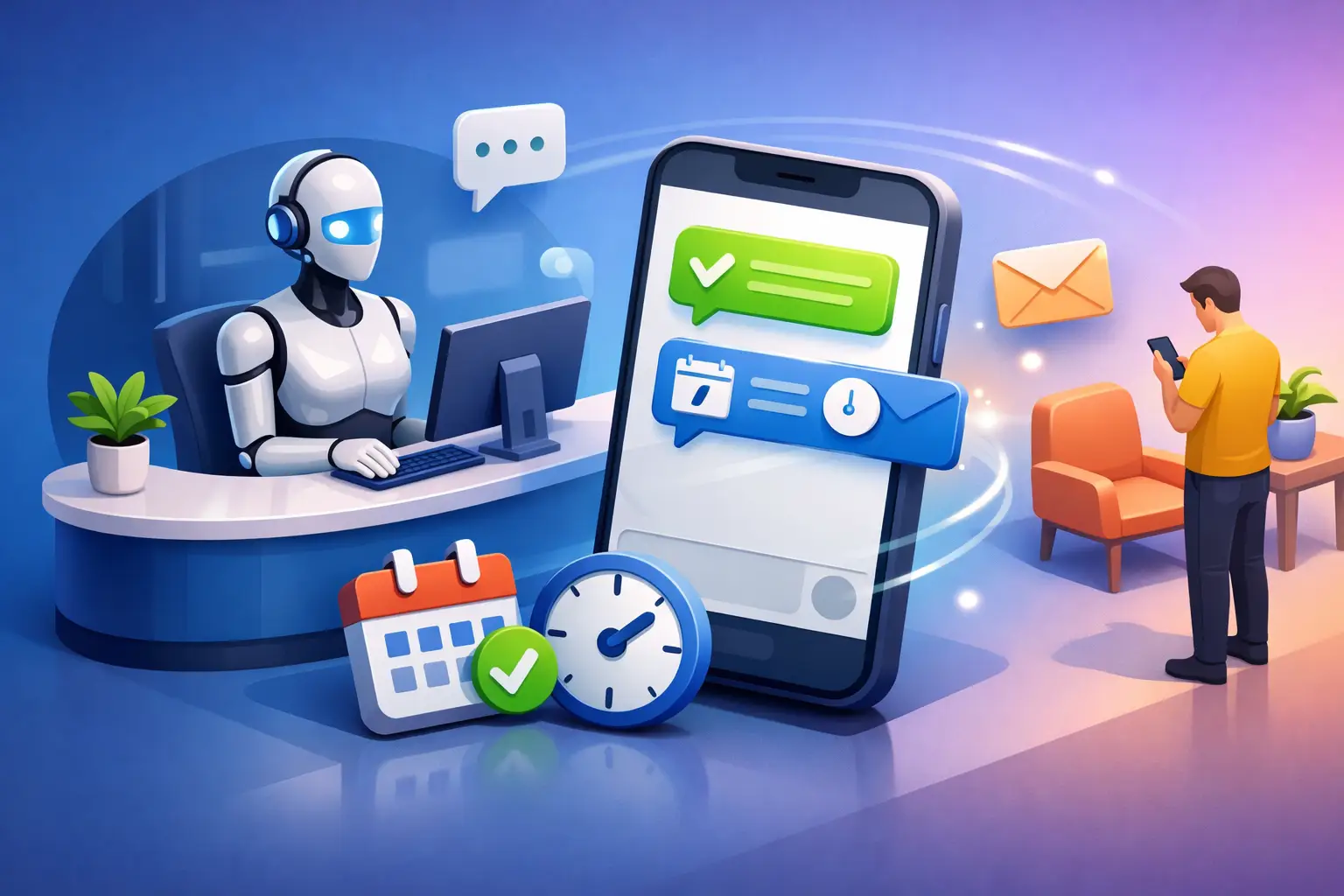
A booked appointment is not revenue until the customer actually shows up. That is why ai receptionist appointment confirmation texts matter more than most teams realize. They are not just reminders. They are part of front-desk execution - confirming intent, catching scheduling conflicts early, and keeping the calendar accurate without pulling staff into repetitive follow-up.
For service businesses that run on appointments, confirmation texts sit right between booking and attendance. If that step is slow, inconsistent, or handled only when someone has time, the schedule starts to drift. Customers forget. Double bookings go unnoticed. Staff spend time chasing replies instead of handling live calls and in-office work. An AI receptionist changes that by making confirmation a standard operating process rather than a manual task.
What AI receptionist appointment confirmation texts actually do
At a basic level, appointment confirmation texts verify that a scheduled customer still plans to attend. The operational value goes further. A well-run confirmation workflow checks the appointment details, prompts a response, and creates a path for the next action.
That next action depends on the business. In some cases, a confirmed reply is enough. In others, the text should trigger rescheduling options, note that the customer needs to call back, or flag the appointment for staff review. The point is not simply sending a message. The point is moving each appointment toward a clear status - confirmed, needs follow-up, or at risk.
This is where an AI receptionist is different from a basic texting tool. A basic tool can send messages on a timer. An AI receptionist supports the workflow around the message. It helps manage replies, interpret intent, and keep communication moving without requiring constant staff intervention.
Why manual confirmation breaks under real front-desk conditions
Most businesses do not struggle with appointment confirmations because they lack awareness. They struggle because the process competes with everything else the front desk handles. Incoming calls, walk-ins, schedule changes, billing questions, and staff coordination all happen at once.
When confirmation depends on staff memory or open time, it becomes uneven. Some customers get a text. Some get a call. Some hear nothing. The result is a calendar that looks full on paper but is less dependable in practice.
That inconsistency creates cost in a few ways. No-shows leave unused capacity. Late cancellations make it harder to refill time slots. Staff members spend time manually reviewing schedules and sending follow-ups that should have happened automatically. Even when the team does the work well, it is hard to maintain the same level of coverage after hours, during lunch, or on high-volume days.
AI receptionist appointment confirmation texts solve a staffing problem as much as a communication problem. They make the confirmation step happen every time, on schedule, and at scale.
The business impact of faster, more consistent confirmation
Confirmation texts are often framed as a customer convenience feature. They are that, but operators should view them as a throughput tool. The faster a business confirms appointments, the sooner it can identify gaps in the schedule and act on them.
If a customer confirms quickly, the slot becomes more reliable. If a customer needs to reschedule, the business has more time to recover the opening. If there is no response, staff can decide whether that account needs additional outreach. Every one of those outcomes is better than discovering uncertainty at the last minute.
Consistency also improves customer experience in a practical way. Customers do not need a highly polished interaction. They need timely, clear communication. A simple text that confirms the date, time, and expected reply is often the most efficient format. It reduces friction and gives people an easy way to respond.
From an operations standpoint, that means fewer voicemail rounds, fewer missed touches, and less dependence on who happens to be working the desk that day.
What effective confirmation workflows look like
The best confirmation workflows are short, clear, and tied to action. A customer should immediately know what appointment is being referenced and what they need to do next. If the message is too vague, replies drop. If it is too long, people ignore it.
Timing matters too. Some businesses need confirmation shortly after booking so the customer knows the appointment is locked in. Others also need a second touch closer to the appointment date. There is no single rule here because the right schedule depends on lead time, customer behavior, and how costly a no-show is.
A med spa, dental office, legal practice, or home service company may all use confirmation texts differently. A business with same-day bookings may want near-immediate confirmation. A business that books weeks out may need both an early confirmation and a later reminder. The operational question is simple: when does confirmation give your team enough time to fix problems before the slot is lost?
That is also why two-way communication matters. If a customer replies that they need to move the appointment, the workflow should not stop there. The system should support the next step, whether that means presenting scheduling options, routing the conversation, or logging the request for staff action.
Where AI adds value beyond scheduled reminders
Many businesses already use reminder texts. That does not mean they have a real confirmation system. A reminder pushes information out. A confirmation process creates a response loop.
AI adds value by handling that loop more intelligently. It can recognize basic intent, classify responses, and keep routine conversations moving. When a customer replies with something other than a simple yes or no, the system can still keep the interaction organized instead of dropping it into a manual queue with no context.
That matters because customer behavior is messy. People reply with partial answers, questions, typos, or requests to change times. A rigid automation sequence often breaks at that point. An AI receptionist is more useful because it can manage common variations without forcing staff to take over every nonstandard reply.
The result is less front-desk drag. Staff are still available for exceptions and higher-value interactions, but they are not spending their day processing predictable appointment confirmations.
What to look for in ai receptionist appointment confirmation texts
If you are evaluating a system, focus less on whether it can send a text and more on whether it improves appointment handling. The real test is operational.
First, the messages need to be reliable and timely. A delayed confirmation loses value quickly. Second, the system should support two-way replies in a way that keeps appointment status visible and actionable. Third, it should fit the scheduling workflow you already run rather than forcing staff into a separate process.
You should also consider after-hours coverage. A large share of inquiries and schedule changes happen outside standard front-desk hours. If confirmation and reply handling pause when the office closes, the business is still carrying a coverage gap.
Reporting matters as well. Operators need to know whether confirmation rates are improving, which appointments remain unconfirmed, and where staff still need to intervene. Without visibility, it is hard to tell whether the system is reducing administrative work or simply moving it around.
Common mistakes businesses make
One common mistake is treating confirmation texts as a one-way broadcast. That approach may look efficient, but it leaves too much unresolved when customers reply with anything more complex than a simple confirmation.
Another mistake is over-automating without defining escalation rules. Not every interaction should stay in automation. Some customers need a person, especially when scheduling gets complicated or service-specific questions come up. Good systems reduce manual work, but they also make handoff clear when needed.
A third mistake is measuring success only by text volume. More messages do not automatically mean better outcomes. The metric that matters is appointment reliability - confirmed attendance, fewer no-shows, faster rescheduling, and less staff time spent chasing customers.
Why this matters for growing service businesses
As appointment volume grows, manual confirmation becomes one of those front-desk tasks that quietly limits performance. It may not feel urgent day to day, but it affects schedule quality, labor efficiency, and customer responsiveness.
That is why businesses are moving toward dedicated reception automation instead of piecing together reminder tools, voicemail callbacks, and staff follow-up. A focused platform like Ortuas is built around the actual receptionist workload - inbound communication, appointment handling, and ongoing customer contact - rather than generic messaging alone.
The practical benefit is straightforward. When appointment confirmation texts are handled consistently by an AI receptionist, your team spends less time on repetitive outreach and more time on the work that actually requires judgment.
A strong front desk is not defined by how busy it looks. It is defined by how reliably it keeps the schedule moving.
Get tips like this in your inbox
We send practical guides on AI, automation, and growing your service business. No spam.