AI Answering Service Reviews for Service Businesses
August 30, 2026
AI answering service reviews should reveal more than friendly calls. Learn how to assess lead capture, scheduling, escalation, reliability, and costs.
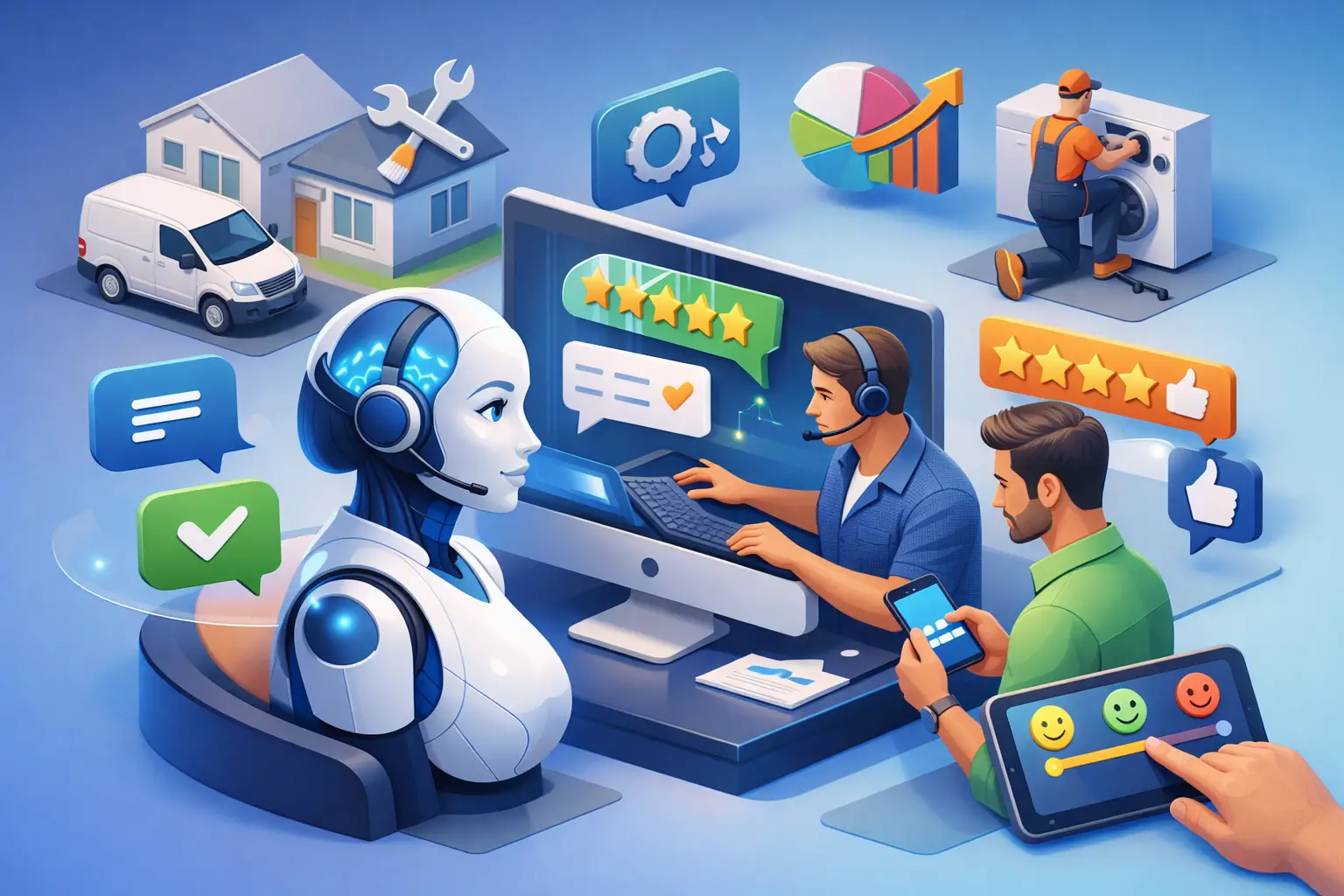
A five-star rating means little if an AI receptionist cannot book into your calendar, recognize an urgent caller, or capture a lead after hours. AI answering service reviews are most useful when they describe what happened after the phone rang: whether the inquiry was handled correctly, the appointment was confirmed, and the business had the information needed to follow up.
For appointment-driven service businesses, the right evaluation is operational. You are not buying a novelty voice experience. You are putting a reception layer in front of prospective customers and existing clients. That layer needs to protect booking volume, reduce front-desk workload, and give callers a clear next step every time.
What AI answering service reviews should tell you
The strongest reviews contain specifics. Look for details about call types, hours of coverage, scheduling outcomes, and exceptions. “The calls sound natural” is positive, but it does not answer the questions that affect revenue: Did the system collect the caller’s name and need? Did it offer the right appointment type? Did it route a complex question to the right person?
Treat broad praise as a starting point, not proof. A review from a business with simple hours and one appointment type may not predict performance for a practice with multiple providers, service areas, intake requirements, or time-sensitive requests. The closer the reviewer’s workflow is to yours, the more useful their experience becomes.
It also helps to separate reviews of an AI answering service from reviews of a general chatbot or call-center platform. A system built around receptionist work should be evaluated on inbound calls, lead capture, routing, scheduling, confirmations, and follow-up communication. Features that do not improve those functions should carry less weight in the decision.
Start with the call flow, not the rating
Ask a provider to show the actual call flow for common situations. This is more revealing than a product tour. A capable AI receptionist should greet callers clearly, identify the reason for the call, answer approved routine questions, and move the conversation toward a booked appointment, a qualified message, or a defined escalation path.
Pay particular attention to how the system handles incomplete or unclear information. Real callers may not know which service they need, may call from a noisy environment, or may change their mind mid-conversation. The service should ask focused follow-up questions without trapping people in a rigid script.
Review how calls are handled when the answer is not available. An AI system should not invent policies, pricing, availability, or medical, legal, or technical guidance. It should capture the request, set reasonable expectations, and route the conversation according to your rules. Reliable restraint is often more valuable than an overly confident answer.
A practical test is to create several scenarios from your own front desk: a new prospect who wants the earliest opening, an existing customer who needs to reschedule, a caller asking about pricing, and an urgent request that needs human attention. Listen for accuracy, clarity, and a useful outcome in each case.
Scheduling performance is the real conversion test
For most service organizations, appointment handling is where an AI answering service either creates value or creates more cleanup work. Reviews should indicate whether the tool can access current availability, understand appointment rules, and prevent duplicate or incorrect bookings.
Confirm the details behind “calendar integration.” A calendar connection alone does not guarantee that the service understands appointment lengths, provider preferences, buffers, locations, eligibility requirements, or blackout dates. Ask how it handles cancellations, rescheduling, waitlists, and bookings made by staff while the system is taking calls.
The best setup depends on your operation. A single-location business with standard appointments may need direct booking and confirmation. A multi-provider office may need the AI to qualify callers first, then offer slots based on service type and provider rules. If a booking requires approval, the system should collect the necessary information and create a clear handoff rather than promise an appointment it cannot finalize.
Also verify the confirmation workflow. A booked appointment has less value if the customer leaves without a confirmation, directions, preparation instructions, or a way to make changes. The reception process should continue beyond the initial call.
Check lead capture and follow-up discipline
Missed calls are expensive because many callers do not leave a voicemail or call back. An AI receptionist should make lead capture consistent, especially during lunch, evenings, weekends, staff shortages, and call spikes.
Reviews that mention faster response times are useful, but ask what data is captured and where it goes. At minimum, your team should receive the caller’s contact information, the reason for the call, relevant qualification details, the requested service, and the promised next action. Notes should be readable and delivered quickly enough for a human follow-up to matter.
The system should also distinguish between a new lead and an existing customer. Those conversations often require different questions and different routing. A prospect may need help selecting a service, while an existing customer may need an account update, a reschedule, or support with a previous appointment.
Ortuas is designed around this reception workflow: handling inbound inquiries, capturing leads, managing appointment steps, and maintaining customer communication without requiring a larger front-desk team. That focus matters when your primary goal is dependable coverage rather than a broad customer support platform.
Evaluate escalation, control, and accountability
No AI answering service should operate without clear rules for when people take over. Before signing, define which calls are transferred immediately, which are turned into messages, and which should trigger an alert. Common escalation categories include safety concerns, service emergencies, upset customers, payment issues, and questions that require a licensed or authorized staff member.
Then ask who controls those rules. Your office should be able to update hours, services, pricing guidance, staff availability, and escalation contacts without a long support request. Some providers manage changes for you, which can be helpful for a busy office. The trade-off is turnaround time. Understand who owns the configuration and how quickly corrections are made.
Accountability also means reporting. You should be able to see call volume, answer rate, missed or abandoned calls, booking outcomes, messages created, and transfer reasons. Reporting does not need to be complicated, but it should show whether the system is reducing lost opportunities and administrative effort.
Look beyond voice quality
A natural-sounding voice affects caller comfort, but it is only one part of the experience. Clear pronunciation, appropriate pacing, and a professional tone matter. So do accurate answers, short paths to resolution, and not forcing callers to repeat information.
Listen for how the service presents your business. It should use your preferred greeting, service terminology, operating hours, and policies. A generic script can make a local professional service sound detached. A tightly configured receptionist sounds informed because it follows the business’s actual processes.
Consider accessibility as well. Can callers speak naturally? Does the system handle interruptions? Can it repeat key information? A service that performs well in a polished demo but struggles with ordinary caller behavior will shift work back to your staff.
Compare cost against coverage and recovered capacity
Pricing should be evaluated against the workload being replaced or supported, not only against the hourly cost of a receptionist. Calculate what missed calls, delayed responses, after-hours voicemails, and manual scheduling currently cost in lost bookings and staff time.
At the same time, read pricing terms carefully. Ask about call-minute limits, overages, setup fees, usage tiers, extra locations, calendar connections, text confirmations, and support costs. A lower starting price may be less attractive if the plan becomes unpredictable during busy months.
The right service does not need to replace every human interaction. Many businesses get the best result by using AI for consistent first response, appointment requests, routine questions, and message capture while staff handle sensitive or complex conversations. That division can extend coverage without sacrificing judgment where judgment is needed.
Before relying on review scores, run your own scenario-based evaluation using the calls your office receives every week. A service that reliably turns those calls into appointments, qualified messages, or correctly routed conversations is the one worth putting at your front desk.
Get tips like this in your inbox
We send practical guides on AI, automation, and growing your service business. No spam.